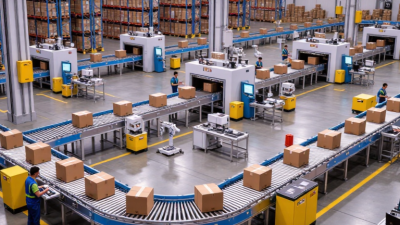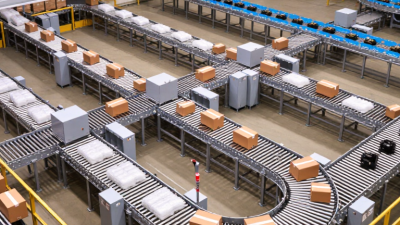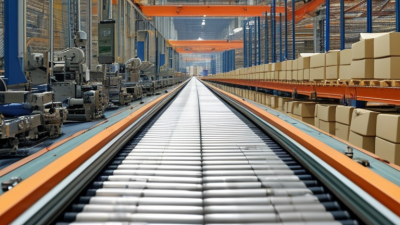



Choosing an automated conveyor for a global facility is rarely a simple catalog decision. Throughput, product size, floor space, controls, and local service can change the outcome. One system may move cartons smoothly, yet struggle with dusty packaging lines or uneven pallets. Another may offer impressive speed, but require costly electrical changes. Small details matter.
This guide examines ten leading automated conveyor systems for international buyers. The comparison considers belt, roller, chain, and modular designs across practical operating conditions. We look at load capacity, speed control, sensor integration, maintenance access, noise, energy use, and expansion potential. We also consider documentation, spare-parts availability, installation support, and compatibility with warehouse software. These factors often determine whether a promising system performs reliably after installation.
No ranking is perfect. A conveyor that suits a high-volume fulfillment center may be excessive for a small manufacturer. Buyers should verify local power requirements, safety expectations, and service coverage before signing a purchase order. Requesting test runs with real cartons can reveal jams that brochures never mention. It is also wise to inspect emergency stops, guarding, transfer points, and cleaning access during a supplier demonstration.
The selections below are intended as a practical starting point, not a universal verdict. Prices, lead times, and performance can change by region and configuration. Careful comparison remains essential.
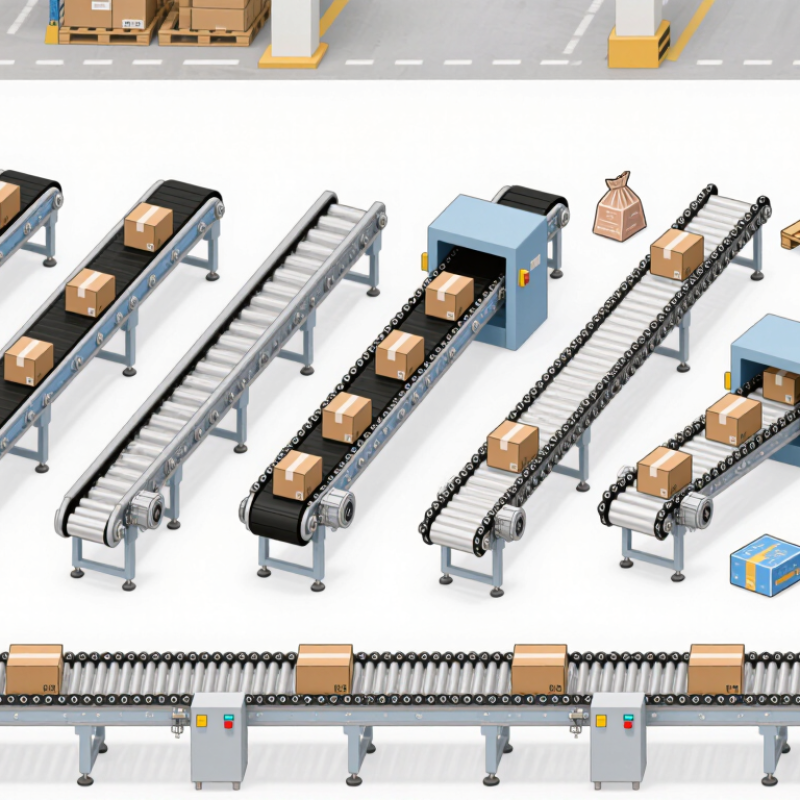
Automated conveyor systems move products with limited manual handling. They use powered belts, rollers, chains, or flexible sections. Sensors detect each item’s position, size, and movement. A control unit then adjusts speed, direction, or spacing. The process resembles a carefully timed road system inside a warehouse.
A typical line starts with loading and ends at packing, storage, or dispatch. Motors drive the conveyor, while photoelectric sensors monitor traffic. Software connects these signals with scanners, weighing equipment, and safety devices. If a box reaches a blocked section, the system can stop upstream movement. This prevents collisions and reduces product damage. It also helps operators track throughput, delays, and energy use.
Good planning requires more than selecting a fast conveyor. Product weight, package shape, floor space, temperature, and maintenance access all matter. In real warehouse trials, small gaps between rollers can affect fragile packages. A layout may appear efficient on paper but create awkward walking routes. That mistake is easy to overlook. Buyers should test representative products before final installation. They should also verify emergency stops, guarding, spare parts, and operator training. Automated equipment improves consistency, but it cannot correct poor process design. Human review remains necessary, especially when demand changes seasonally or product sizes vary.
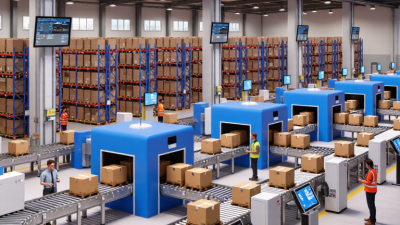
Comparing conveyor systems worldwide requires more than checking speed and price. Start with throughput, product size, weight, and the required transfer distance. A system moving cartons needs different controls than one handling fragile components. Belt, roller, chain, and modular designs each suit specific working conditions. Measure peak demand, not only average demand. Otherwise, bottlenecks may appear during seasonal orders.
Automation quality also depends on integration. Check compatibility with warehouse software, scanners, sensors, and existing equipment. Ask how quickly technicians can diagnose faults remotely. Regional voltage, climate, dust, and temperature can affect reliability. Safety guarding and emergency stops should match local requirements. Documentation must be clear and available in the operating team’s language. Total cost includes installation, energy use, spare parts, training, and maintenance downtime. The cheapest quotation can become expensive after repeated stoppages.
Tips: Request performance data from comparable installations, not general promises. Test noise levels, access points, and cleaning procedures before approval. Leave space for future expansion. A perfect comparison rarely exists. Some buyers focus too heavily on speed and overlook maintenance access. That mistake is easy to make. Review supplier response times, warranty limits, and replacement-part availability in each target region. Also record every assumption, because small changes in carton dimensions can alter the entire system design.
The 10 Best Automated Conveyor Systems for Global Buyers should be judged by application, not appearance. Belt, roller, chain, pallet, overhead, sortation, spiral, vertical lift, flexible, and autonomous mobile conveyor systems serve different material flows. Belt conveyors suit cartons and parcels. Roller systems handle rigid loads with stable bases. Pallet conveyors support heavier units. Sortation systems improve routing accuracy in distribution centers.
MHI’s 2024 Annual Industry Report found that 55% of supply-chain professionals planned to increase technology investment. This reflects growing pressure to reduce manual handling and labor dependency. However, automation is not automatically efficient. A poorly sized motor can waste energy. Incorrect sensor placement can create repeated stoppages. Global buyers should examine throughput, load weight, product dimensions, noise, maintenance access, and local electrical standards. Interfaces with warehouse software also need careful testing. A fast conveyor is still a weak investment if operators cannot repair it quickly.
Tips: Request a real product-flow simulation before purchase. Test cartons with damaged edges, uneven spacing, and mixed weights. Compare total ownership costs, not only equipment prices. Ask for spare-parts availability in the destination country. I would also leave space for future expansion. Many projects fail because the original layout becomes a permanent limitation. Check safety guarding, emergency stops, training documents, and conformity with applicable regional requirements. Supplier claims should be verified through factory acceptance tests and documented performance data.
A practical comparison of widely used automated conveyor system configurations for manufacturing, warehousing, distribution, and parcel-handling operations.
| Rank | Automated Conveyor System | Primary Conveying Method | Typical Load Capacity | Typical Speed Range | Recommended Product Size | Automation Features | Best-Fit Applications | Key Advantages |
|---|---|---|---|---|---|---|---|---|
| 1 | Motor-Driven Roller Conveyor | Powered rollers move cartons, totes, pallets, or containers. | Up to 1,500 kg per load | 0.1–1.0 m/s | Medium to large loads with a rigid, flat base | Zone control, photoelectric sensors, accumulation logic, barcode routing, variable-speed drives | Distribution centers, pallet handling, assembly lines, shipping and receiving | Strong load capacity, controlled accumulation, modular layout, and easy integration with sortation equipment |
| 2 | Belt Conveyor with Variable-Speed Drive | A continuous belt transports products on a flat or inclined surface. | Up to 250 kg per meter | 0.2–2.5 m/s | Small packages, cartons, bags, loose products, and irregular items | Variable-frequency drive, sensors, weighing, barcode scanning, emergency-stop circuits | Parcel handling, food processing, packaging, airport logistics, and general material transfer | Versatile product handling, quiet operation, incline capability, and consistent product spacing |
| 3 | Modular Plastic Belt Conveyor | Interlocking plastic belt links form a cleanable conveying surface. | Up to 300 kg per meter | 0.1–1.5 m/s | Packaged goods, containers, trays, and products requiring transfers or curves | Servo or variable-speed control, product tracking, sensors, recipe-based line control | Food and beverage, pharmaceutical packaging, cosmetics, and hygienic production areas | Washdown-friendly design, flexible configurations, positive tracking, and simple belt replacement |
| 4 | Accumulation Conveyor | Products collect in controlled zones without continuous back-pressure. | Up to 100 kg per load | 0.1–0.8 m/s | Cartons, totes, cases, and containers with stable bases | Zero-pressure zones, photoelectric sensors, programmable logic controller, release sequencing | Order fulfillment, packaging buffers, inspection stations, and production line balancing | Reduces product damage, supports buffering, and maintains orderly flow between workstations |
| 5 | Flexible Spiral Conveyor | A continuous belt or roller surface moves products vertically through a spiral path. | Up to 75 kg per load | 0.2–0.7 m/s | Cartons, totes, bags, and packaged products | Speed synchronization, presence sensors, level monitoring, and automated line interlocking | Multi-level warehouses, mezzanines, packaging lines, and space-constrained facilities | Saves floor space, provides continuous elevation change, and minimizes the need for lifts or manual transfer |
| 6 | Overhead Trolley Conveyor | Motorized trolleys carry suspended products along an overhead track. | Up to 500 kg per carrier | 0.05–0.5 m/s | Hanging garments, vehicle components, finished assemblies, and irregular loads | Carrier identification, automated routing, stop stations, accumulation, and production tracking | Automotive, garment handling, paint lines, surface treatment, and heavy assembly operations | Frees floor space, supports complex routing, and allows products to remain suspended during processing |
| 7 | Chain Conveyor | One or more chains push or carry heavy loads along a guided path. | Up to 2,000 kg per load | 0.05–0.5 m/s | Pallets, skids, metal parts, fixtures, and heavy containers | Proximity sensors, pallet stops, load positioning, motor control, and safety interlocks | Heavy manufacturing, pallet transfer, automotive production, and industrial assembly | High load capability, durable construction, reliable indexing, and suitability for harsh environments |
| 8 | Powered Roller Sortation Conveyor | Motorized rollers divert products to designated lanes or destinations. | Up to 100 kg per load | 0.5–2.5 m/s | Cartons, totes, polybags with rigid inserts, and parcels | Barcode or vision identification, warehouse-control integration, divert actuators, and real-time tracking | Parcel hubs, e-commerce fulfillment, retail distribution, and third-party logistics | High throughput, accurate routing, scalable lanes, and reduced manual sorting requirements |
| 9 | Cleated Incline Conveyor | Cleats or flights prevent products from sliding during elevation changes. | Up to 150 kg per meter | 0.1–1.0 m/s | Loose parts, cartons, bags, packaged foods, and products with uneven surfaces | Level sensors, variable-speed control, metering, hopper integration, and automated start-stop logic | Recycling, food handling, packaging, bulk material transfer, and mezzanine replenishment | Reliable incline conveying, controlled product elevation, compact layouts, and reduced product rollback |
| 10 | Autonomous Mobile Robot Conveyor Interface | Mobile robots transport loads between fixed conveyor stations and storage locations. | Typically 50–1,500 kg per robot | 0.8–2.0 m/s travel speed | Totes, cartons, pallets, and standardized load carriers | Fleet management, wireless communication, navigation software, traffic control, and conveyor handoff logic | Goods-to-person fulfillment, flexible manufacturing, warehouse replenishment, and mixed-order operations | Flexible routing, rapid deployment, reduced fixed infrastructure, and easy capacity expansion |
Note: Performance figures are typical engineering ranges for globally available conveyor configurations. Actual capacity and speed depend on conveyor length, product dimensions, load distribution, incline angle, duty cycle, safety requirements, and local electrical standards.
10 Best Automated Conveyor Systems for Global Buyers
Industry Applications, Integration Options, and Scalability
The ten strongest conveyor choices cover belt, roller, chain, pallet, spiral, overhead, and sorting designs. Each suits a different operating reality. Belt conveyors move cartons quietly through fulfillment zones. Powered rollers handle pallets, totes, and irregular loads. Spiral systems save floor space between levels. Sortation conveyors support high-volume parcel routing, while overhead systems keep work areas clear.
Application fit should guide the purchase. Food facilities need washable surfaces and controlled access. Automotive plants often require precise pallet positioning. E-commerce warehouses need accumulation, scanning, and rapid diverting. MHI’s 2024 Annual Industry Report found that 55% of respondents planned to increase supply-chain technology investment. That figure suggests demand, but not automatic success. Poorly matched equipment still creates expensive bottlenecks.
Integration determines practical value. A reliable system should connect with warehouse software, barcode readers, safety controls, and existing material-handling equipment. Industrial Ethernet, programmable controllers, and standardized data interfaces can simplify expansion. IFR reported 541,302 industrial robots were installed worldwide in 2023, showing how quickly automated workflows are developing. Conveyors increasingly become the connecting layer between robots, storage, and packing stations. I would avoid designing only for today’s volume. Leave space for extra drives, sensors, and conveyor modules. It costs less than rebuilding a crowded line. Mistakes happen. A pilot section, tested under peak load, often reveals them early.
Industry applications, integration options, and scalability comparison based on typical engineering operating ranges. Throughput is shown in units per hour, while maximum load is shown in kilograms. Actual performance depends on product size, layout, controls, and operating conditions.
High-speed sortation and belt systems are generally suited to e-commerce and parcel distribution. Chain, pallet, and powered-roller systems provide higher load capacity for manufacturing, warehousing, and heavy-duty material handling. Modular and spiral designs are useful when hygiene, vertical movement, or limited floor space is a priority.
Choosing among the 10 best automated conveyor systems requires more than comparing purchase prices. In real warehouse projects, integration often costs more than expected. Budget for controls, installation, software, training, spare parts, and production delays. Energy use also matters, especially when conveyors run continuously. A lower-priced system may consume more power or require costly modifications. I have seen attractive quotations become expensive after site constraints appeared.
Maintenance should be planned before delivery. Ask how quickly technicians can replace motors, sensors, belts, and rollers. Request maintenance intervals, fault codes, lubrication instructions, and spare-part prices. Remote diagnostics can reduce downtime, but only when staff understand the data. Keep critical components locally when possible. Small delays become large losses.
Safety cannot be treated as an optional feature. Check guarding, emergency stops, access controls, load limits, and safe restart procedures. Require a documented risk assessment and practical operator training. Suppliers should explain how the system handles jams and unexpected power loss. Test these conditions during acceptance trials. They are not minor details. For supplier selection, examine technical references, service coverage, delivery records, documentation quality, and change-control practices. Ask for a live demonstration using loads similar to yours. No supplier is perfect. A vague answer today may become a serious maintenance problem later. Evaluate lifecycle value, not polished sales language.