






Why Choose a Chemical IBC Tank for Bulk Storage?
Bulk chemical storage demands more than a large container. It requires controlled handling, material compatibility, and dependable protection for workers and facilities. A Chemical IBC Tank can provide a practical balance between capacity, mobility, and efficient space use. Its compact footprint may hold substantial volume while leaving clearer access around pumps, valves, and inspection points. In a busy warehouse, that difference matters.
Operators often value the integrated pallet base and accessible discharge valve. These features can simplify movement, filling, and controlled dispensing. However, performance depends on the stored chemical, temperature range, concentration, and tank construction. A polyethylene bottle may suit some liquids, while other applications require specialized liners or materials. Always confirm compatibility with the manufacturer and review the relevant safety data sheet.
Details matter.
Experienced storage teams inspect seams, caps, valves, and labels before each use. They also consider secondary containment, ventilation, grounding needs, and local fire-safety requirements. Cleaning procedures deserve attention too, especially when product residues could react with a later batch. Reusable IBC systems may reduce handling waste, but only when inspection and maintenance are consistent.
No container is perfect. A single size does not fit every process. Choosing solely by volume can create problems with access, stability, or chemical resistance. Reliable decisions combine supplier documentation, site experience, risk assessment, and routine checks. With that disciplined approach, a Chemical IBC Tank can support safer, more organized bulk storage without adding unnecessary complexity.
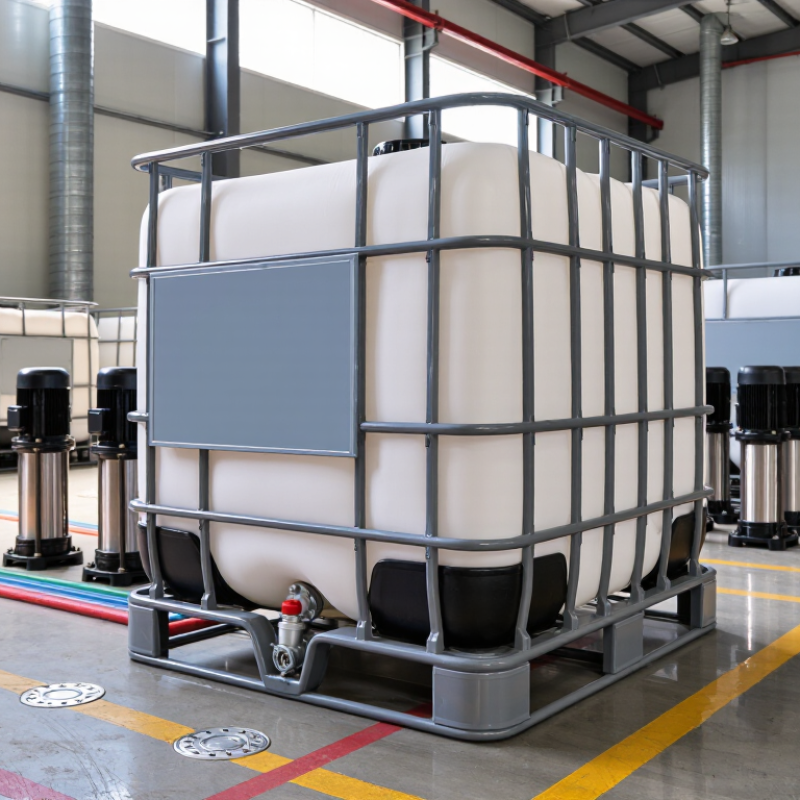
A chemical IBC tank is a reusable bulk container designed for safer, more efficient liquid storage.
Most units combine a chemical-resistant inner vessel, a protective metal cage, and a pallet base. Common capacities range from 600 to 1,000 liters, helping facilities reduce the number of smaller containers handled each day. That matters when workers move liquids across filling areas, warehouses, or production lines.
Material compatibility is the starting point. The tank must suit the chemical’s concentration, temperature, density, and storage period. Check the safety data sheet and technical specifications before filling.
A suitable outlet valve can reduce spills during transfer, while a secure cap helps prevent contamination. Secondary containment remains important, even with a well-designed IBC. One leak can spread quickly across a smooth warehouse floor.
IBC tanks also support practical inventory control. Their standard footprint allows organized stacking or racking when approved by the supplier. Clear labels, batch records, and routine inspections improve traceability.
Operators should examine the inner tank, cage, valve, and pallet for cracks, distortion, or residue. Do not assume a clean appearance means safe reuse. Some chemicals weaken plastic gradually, without obvious warning signs.
The tank is useful, but it is not maintenance-free. Storage conditions, handling equipment, ventilation, and local requirements still determine whether bulk storage performs reliably.

A chemical IBC tank supports efficient bulk storage when its materials match the stored liquid. The tank body should resist corrosion, stress cracking, and temperature changes. Fit is not universal. Polyethylene may suit some liquids, while other chemicals require different construction materials. Always verify compatibility using current technical data.
A strong outer cage protects the container during movement and daily handling. A stable pallet base also helps forklifts position the tank safely. Secure valve guards reduce accidental opening near loading areas. Clear level markings support controlled filling and prevent dangerous overfilling. Small details matter. A readable label should show the chemical name, hazards, batch information, and handling instructions.
Vent design deserves close attention. Pressure can change during filling, emptying, or temperature shifts. A suitable vent helps prevent vacuum damage and uncontrolled pressure buildup. Grounding may also be necessary when flammable liquids are handled. Secondary containment should capture leaks around valves, seams, or damaged fittings. Regular inspections should examine swelling, discoloration, cracks, and loose connections.
In real facilities, operators sometimes trust a tank because it looks clean. That is not enough. Hidden stress can develop around outlets and lifting points. Inspection records, training, and chemical-specific procedures remain essential. A tank can be well designed and still be misused.
Chemical IBC tanks improve storage efficiency by combining high capacity with a compact, stackable footprint. A typical 1,000-liter unit can replace several smaller drums, reducing handling points, labels, and transfer connections.
That matters.
In a busy warehouse, operators can move one tank with a forklift instead of coordinating multiple drum movements. A visible level gauge also supports faster stock checks and more accurate replenishment. The OECD’s Global Chemicals Outlook projects global chemical production could double between 2017 and 2060. Efficient storage will become increasingly important as material volumes grow. The U.S. Environmental Protection Agency reported that containers and packaging represented 28.1% of municipal solid waste generation in 2018. Reusable IBC systems may help reduce unnecessary secondary packaging, although results depend on cleaning, inspection, and return practices.
Efficiency is not only about fitting more liquid into less space. Chemical compatibility, valve condition, grounding, ventilation, and spill containment must be verified before filling. The UN Recommendations on the Transport of Dangerous Goods require performance testing for regulated IBC designs, including pressure, drop, and leak tests. A tidy tank can still be a poor choice if its liner reacts with the chemical. That assumption deserves checking.
From practical warehouse planning, the best layout leaves clear access around each tank and keeps incompatible chemicals separated. A few extra centimeters for inspection can prevent costly delays. The overlooked detail is often the outlet height. If it does not align with the pump or process line, efficiency disappears quickly.
Chemical IBC tanks offer efficient bulk storage, but the right container depends on the chemical’s behavior. Material selection should never rely on appearance or price alone. High-density polyethylene suits many acids, alkalis, and water-based solutions. However, oxidizers, aromatic solvents, and aggressive mixtures may require stainless steel or a specialized liner. Compatibility changes with concentration, temperature, storage time, and repeated filling.
The OECD’s Global Chemicals Outlook II projects global chemical production could double by 2030. This growth increases the need for dependable containment and traceable handling procedures. The UN Recommendations on the Transport of Dangerous Goods also emphasize testing, marking, and packaging performance for regulated substances. A chemical IBC tank should therefore have documented compatibility data, pressure information, and appropriate certification. A small mistake can become an expensive one. Do not assume “chemical-resistant” means universally safe.
Tips: Request a compatibility letter for the exact chemical, concentration, and operating temperature. Check permeation risk for solvents and inspect valves, gaskets, and outlet fittings before use. Keep the supplier’s technical datasheet with the tank records. FM Global guidance also recommends controlling ignition sources and static risks during liquid transfer. In practice, grounding alone may not solve every problem. Review transfer speed, hose condition, ventilation, and operator training together. When uncertainty remains, perform a controlled compatibility test with qualified technical support.
Selection guide for common industrial chemicals based on chemical compatibility, concentration, temperature, and handling requirements.
| Chemical | Typical Concentration | Primary Chemical Risk | HDPE IBC Suitability | Preferred Tank Construction | Typical Gasket Material | Indicative Storage Temperature | Selection Notes |
|---|---|---|---|---|---|---|---|
| Sodium Hydroxide | 20–50% w/w | Highly corrosive and alkaline; can attack some metals. | Generally suitable | HDPE inner bottle with compatible fluoropolymer or EPDM seals | EPDM or PTFE, subject to concentration and temperature | Typically 15–30°C | Use a UV-protected outer cage and confirm the maximum allowable temperature before filling. |
| Hydrochloric Acid | 28–33% w/w | Strongly corrosive; releases acidic vapors and can corrode ordinary steel. | Generally suitable | HDPE inner bottle; avoid unlined carbon-steel contact surfaces | PTFE or compatible fluoropolymer | Typically 10–25°C | Provide adequate ventilation and keep fittings, valves, and closures compatible with hydrochloric acid service. |
| Sulfuric Acid | 30–50% w/w | Strong acid; corrosive and highly exothermic when diluted or mixed with water. | Concentration-dependent | HDPE may be suitable for selected concentrations; use specialized acid-rated construction | PTFE or acid-compatible fluoropolymer | Typically 15–25°C | Compatibility changes significantly with concentration and temperature. Never add water directly to concentrated acid. |
| Nitric Acid | 20–30% w/w | Strong oxidizing acid; may react with organic materials and some metals. | Verify before use | Acid-compatible HDPE or stainless steel selected for nitric-acid service | PTFE or approved fluoropolymer | Typically 10–25°C | Keep away from combustible materials, reducing agents, and contaminated equipment. Confirm oxidizer compatibility for every wetted component. |
| Hydrogen Peroxide | 30–35% w/w | Strong oxidizer; decomposition can generate heat and oxygen gas. | Specialized service required | Clean, dedicated HDPE IBC designed for oxidizing chemicals | PTFE or peroxide-compatible fluoropolymer | Preferably below 25°C | Use clean, compatible equipment only. Do not share the tank with incompatible residues, metals, or organic contaminants. |
| Sodium Hypochlorite | 10–15% available chlorine | Oxidizing and corrosive; decomposes faster with heat, light, and contamination. | Generally suitable | Opaque or UV-protected HDPE IBC with compatible fittings | EPDM or PTFE, depending on the fitting design | Preferably 10–25°C | Allow suitable venting and avoid acids, ammonia, reducing agents, heat, and direct sunlight. |
| Phosphoric Acid | 50–85% w/w | Corrosive at higher concentrations; may attack some metals. | Often suitable | HDPE inner bottle or corrosion-resistant stainless steel selected for the concentration | EPDM or PTFE | Typically 15–30°C | Check compatibility when the acid contains fluoride, chloride, or other additives. |
| Acetic Acid | Glacial to 30% w/w | Flammable at higher concentrations; corrosive in concentrated form. | Concentration-dependent | HDPE for many diluted grades; stainless steel for selected concentrated grades | PTFE or compatible elastomer | Typically 15–25°C | For glacial acetic acid, assess flammability, vapor control, grounding, and the suitability of all seals and valves. |
| Methanol | Industrial grade or aqueous solution | Highly flammable and toxic; may permeate or stress-crack some plastics. | Verify permeation resistance | Stainless steel IBC or approved conductive chemical container | PTFE or solvent-compatible elastomer | Typically 15–25°C | Use grounding and bonding where required, control ignition sources, and confirm electrical and transport requirements. |
| Ethanol | 70–100% v/v | Highly flammable; vapors can form explosive mixtures with air. | Application-specific | Stainless steel IBC or approved container for flammable liquids | PTFE or ethanol-compatible elastomer | Typically 15–25°C | Confirm that the IBC is approved for flammable-liquid service and provide suitable grounding, ventilation, and fire controls. |
| Toluene | Industrial grade | Flammable solvent; can cause swelling or permeation in some plastics and elastomers. | Not preferred | Stainless steel IBC or certified container for flammable solvents | PTFE or solvent-compatible fluoropolymer | Typically 15–25°C | Use a certified design for flammable liquids, with grounding, bonding, vapor control, and compatible valves. |
| Mineral Oil | Industrial or process grade | May swell or soften certain elastomers; combustible rather than normally classified as highly flammable. | Generally suitable | HDPE or stainless steel, depending on temperature and purity requirements | Nitrile, FKM, or PTFE, subject to the oil formulation | Typically 15–40°C | Check compatibility with additives, elevated temperature, and any requirement for product cleanliness. |
| Aqueous Ammonia | 10–25% w/w | Corrosive and irritating; releases ammonia vapor, especially when warm. | Generally suitable | HDPE inner bottle with compatible closures and venting | EPDM or PTFE | Typically 10–25°C | Store in a cool, ventilated location and prevent contact with acids, oxidizers, and incompatible metals. |
Important: Compatibility ratings are general engineering guidance, not a substitute for a chemical compatibility test or supplier approval. Final selection should consider concentration, temperature, exposure time, specific formulation, density, filling and discharge equipment, gasket composition, UN/DOT/ADR requirements, ventilation, grounding, and local regulations.
Why Choose a Chemical IBC Tank for Bulk Storage?
Maintenance, Compliance, and Safe Operating Practices
A chemical IBC tank supports efficient bulk storage when its construction matches the stored substance. Check the safety data sheet before filling. Confirm chemical compatibility, temperature limits, and maximum fill volume. A small mismatch can damage the container or create a leak. That risk deserves attention.
Inspect the tank before every use. Look for cracks, bulging, discoloration, damaged valves, and loose fittings. Keep the outlet closed when the tank is idle. Clean spills immediately using procedures approved for the specific chemical. Store the IBC on a stable, level surface inside suitable secondary containment. Keep access clear. Good housekeeping matters.
Compliance depends on documented habits, not labels alone. Record inspections, cleaning, repairs, and staff training. Maintain clear identification on every container, including hazard information and batch details. Follow applicable storage, transport, ventilation, and emergency requirements. Grounding may be necessary when handling flammable liquids, but qualified personnel should assess the setup. Never assume one procedure fits every chemical. That shortcut is easy to make, and difficult to defend after an incident. Even careful teams miss details sometimes. Review the process.

