Top 10 Industrial Automation Solutions for Global Buyers?
In today’s fast-paced industrial landscape, the demand for efficient operations is paramount. Businesses strive to adopt **industrial automation solutions** that enhance productivity and reduce costs. With technological advancements, global buyers are presented with many options. Each solution varies in capability and suitability.
The integration of automation technologies can streamline processes, yet many companies face challenges. Selecting the right solution requires careful consideration. Understanding specific needs is vital. Not all **industrial automation solutions** are one-size-fits-all. Factors like scalability, compatibility, and ROI must guide decisions.
While some solutions promise quick results, their long-term effectiveness may be questionable. It’s important to evaluate recent case studies and reviews from trusted sources. Industrial automation has great potential, but informed choices lead to successful implementation.
Overview of Industrial Automation Solutions
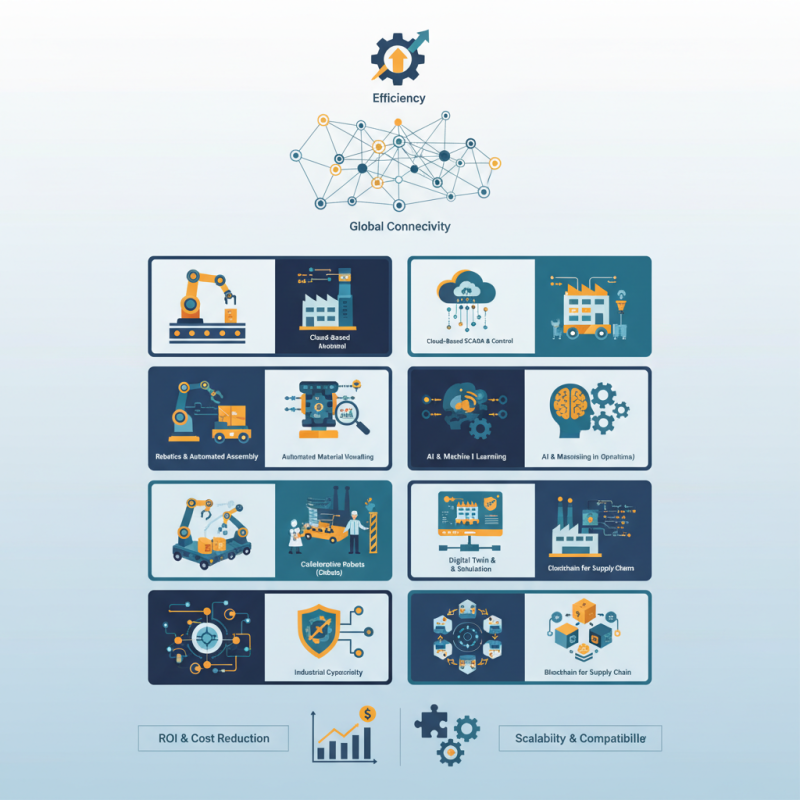
Industrial automation solutions play a crucial role in enhancing operational efficiency across sectors. These technologies automate tasks that were once manually intensive, reducing errors and improving productivity. Solutions can range from robotics and AI to more traditional factory automation systems. Understanding these options is essential for businesses aiming for modernization.
Tips: Evaluate your needs before investing. Identify specific processes that require automation. Not every solution fits every company.
Investing in training for staff is equally important. Workers must understand new systems to maximize their benefits. They should be comfortable with technology, which can be daunting. Clear training will ease this transition.
Additionally, consider scalability. Choose solutions that can grow with your business. Flexibility is vital to adapting to future challenges. Not all solutions will align perfectly with current operations. Trial and feedback can guide necessary adjustments.
Top 10 Industrial Automation Solutions for Global Buyers
| Solution Type |
Key Features |
Industry Applicability |
Estimated Cost |
Market Trend |
| PLC Systems |
Programmable logic controls, robust programming capabilities |
Manufacturing, Energy |
$1,000 - $10,000 |
Stable demand |
| SCADA Systems |
Real-time monitoring, control, and data acquisition |
Water, Oil & Gas |
$5,000 - $50,000 |
Growing with IoT integration |
| Robotic Process Automation |
Automation of repetitive tasks, machine learning capabilities |
Finance, Manufacturing |
$10,000 - $100,000 |
High growth potential |
| Industrial IoT Solutions |
Connected devices, real-time analytics, predictive maintenance |
Manufacturing, Logistics |
$20,000 - $200,000 |
Rapid growth with 5G |
| HMI Systems |
User-friendly interfaces, data visualization |
Manufacturing, Energy |
$500 - $5,000 |
Increasing user demand |
| DCS Systems |
Process control, centralized monitoring |
Chemical, Oil & Gas |
$10,000 - $100,000 |
Stable market presence |
| Automated Guided Vehicles (AGVs) |
Automatic navigation, load transport capabilities |
Warehousing, Manufacturing |
$50,000 - $500,000 |
Expanding applications |
| Sensor Technology |
Real-time data capture, various types available |
All industries |
$100 - $2,000 per sensor |
Consistent growth |
| Cloud-Based Solutions |
Remote access, data storage, and backup |
Manufacturing, IT |
$1,000 - $20,000 annually |
Rapid adoption |
| Artificial Intelligence in Automation |
Advanced analytics, decision-making capabilities |
Manufacturing, Supply Chain |
$15,000 - $150,000 |
Emerging tech trend |
Key Technologies in Industrial Automation
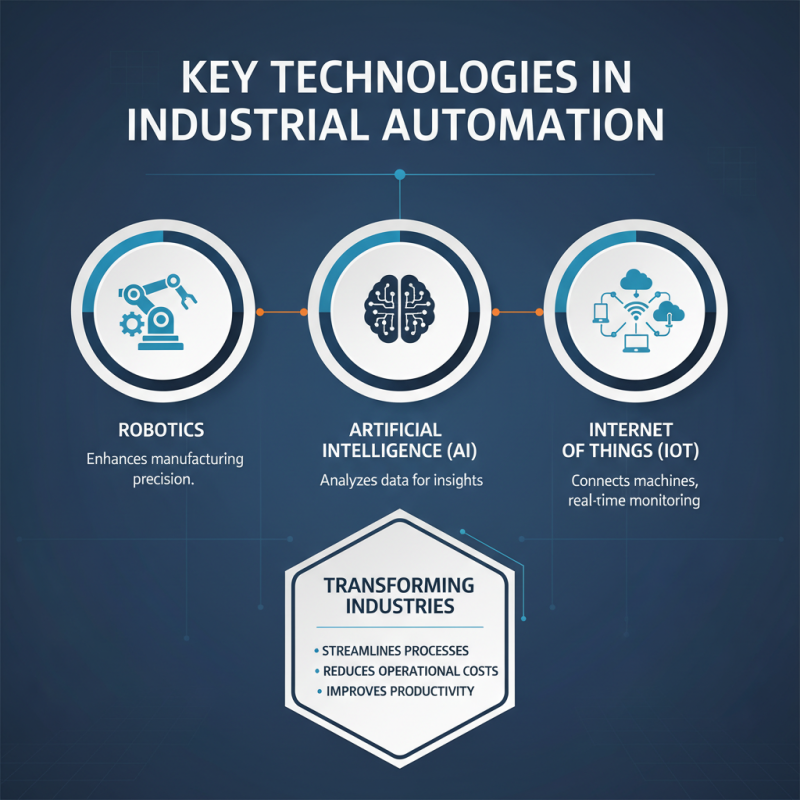
Industrial automation is transforming global industries by integrating advanced technologies. Key technologies in this field include robotics, artificial intelligence, and the Internet of Things (IoT). These systems help to streamline processes, reduce operational costs, and improve productivity. Robotics enhance precision in manufacturing, while AI analyzes data for better decision-making. IoT connects machines, facilitating real-time monitoring.
Implementing these technologies is a complex task. Organizations must consider the specific needs of their operations. While automation can increase efficiency, it may also displace a portion of the workforce. This scenario prompts the need for retraining employees. It’s essential to develop a strategy that balances innovation and workforce stability.
Tip: Evaluate your infrastructure before adopting new technologies. Understand what you currently have and how it can integrate with automation solutions. Remember, not all solutions fit every type of business. A tailored approach often yields the best results. Make sure to assess both potential benefits and possible disruptions during implementation.
Top Global Providers of Automation Solutions
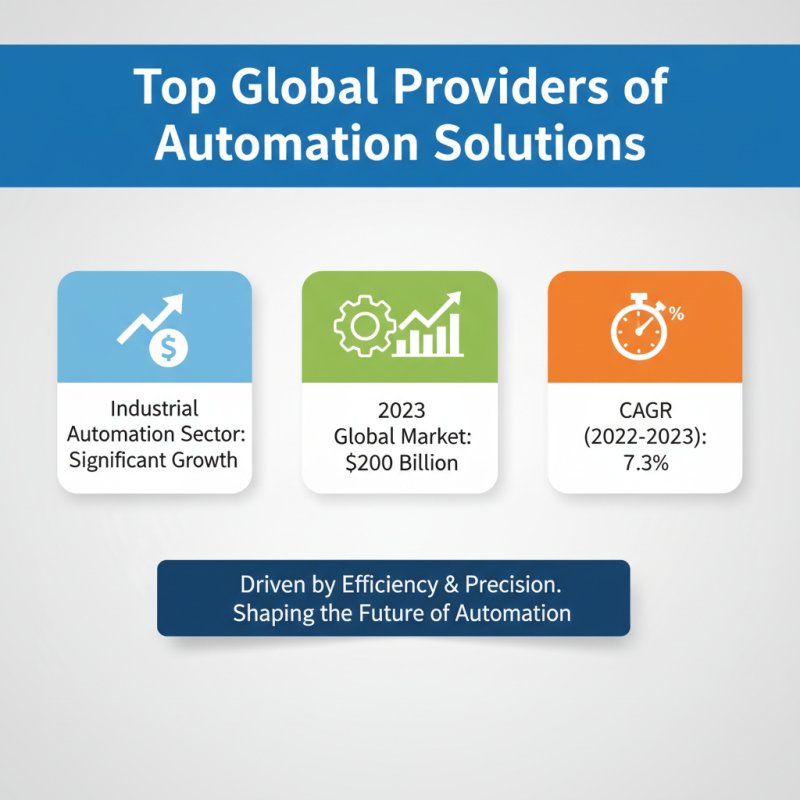
The industrial automation sector has witnessed significant growth, driven by the increasing demand for efficiency and precision. In 2023, the global market for automation equipment is projected to reach $200 billion, showcasing a compound annual growth rate (CAGR) of 7.3% from 2022. This growth has opened opportunities for various providers who are shaping the future of automation solutions.
Key players in this arena focus on integrating advanced technologies, such as AI and IoT, into their offerings. Reports indicate that 60% of manufacturing leaders are investing heavily in these technologies to enhance productivity and reduce downtime. However, the challenge remains in ensuring interoperability among different systems. Many organizations face integration issues, affecting overall performance. These hurdles pose questions about the reliability of various solutions.
Moreover, cyber security remains a pressing concern. As automation systems become increasingly interconnected, the risk of cyber threats escalates. Industry studies reveal that nearly 30% of companies have encountered security breaches in their automation networks. Addressing these vulnerabilities is crucial for providers aiming to build trust among buyers and ensure a safer operating environment.
Criteria for Selecting Automation Solutions
When selecting industrial automation solutions, several criteria come into play. Assessing the specific needs of your operations is crucial. Consider the scalability of the solution. It should grow alongside your business. Evaluate integration capabilities. Can the system work with your current infrastructure? Compatibility is vital for seamless operation.
Cost-effectiveness is another essential factor. The cheapest option may not provide long-term value. Analyze total cost of ownership, including maintenance and training. Additionally, look for user-friendly interfaces. Complex systems can lead to errors and lower productivity.
Beyond functionality, evaluate the provider’s support. Reliable customer service can make a difference. Seek feedback from other users to gauge the system’s reliability. Investing time in thorough research can prevent costly mistakes. Understand that not every solution will meet every requirement perfectly. Balancing ideal features with practical limitations is part of the decision-making process.
Top 10 Industrial Automation Solutions for Global Buyers
Future Trends in Industrial Automation Technologies
The landscape of industrial automation is rapidly changing. As technology advances, new trends shape the future of this field. According to the International Federation of Robotics, industrial robot installations worldwide are projected to reach 3.8 million units by 2025. This indicates a strong trend towards automation as companies seek greater efficiency and reduced operational costs.
One notable trend is the integration of artificial intelligence (AI) in automation solutions. AI enhances decision-making processes and streamlines operations. A report by McKinsey indicates that AI could increase productivity by up to 40% by 2035. This represents a significant opportunity for industries to leverage data-driven insights.
Tips: Embrace AI technologies wisely. Identify specific tasks to automate. Monitor their performance regularly for optimal results.
Another area of growth is the Internet of Things (IoT). IoT sensors and devices allow for real-time data analysis in manufacturing. According to a report from Gartner, by 2025, there will be over 75 billion connected devices. This connectivity can improve maintenance cycles and enhance supply chain management.
Tips: Invest in IoT infrastructure. Ensure cybersecurity measures are in place. Evaluate the impact of connected devices on existing workflows.
As industries move forward, the blending of automation with human capabilities remains a challenge. Companies must find a balance to ensure that automation complements human labor without displacing it. Continuous training and adaptation will be vital for success in this evolving landscape.