






China has become a major sourcing destination for customized bulk packaging, including the Odm Baffle Bag Fibc. However, choosing a reliable manufacturer requires more than comparing online prices. Buyers should examine fabric strength, baffle design, seam quality, filling efficiency, and documented load testing. Small details matter.
Chen Wei, an FIBC product-development engineer with experience in Chinese manufacturing, explains, “A baffle bag is reliable only when its design, materials, and testing work together.” This practical observation frames the search for China Top ODM Baffle Bag FIBC Manufacturers. A capable supplier should understand polypropylene fabric selection, corner construction, inlet and outlet options, dust control, and pallet stability. It should also convert drawings into repeatable production, not merely copy a sample.
Strong ODM partners usually provide clear technical drawings, sample approval, factory inspection records, and traceable quality procedures. They can discuss ISO 21898 requirements and explain when UN certification is appropriate. Their answers should be specific. Vague promises are warning signs. Buyers should request production samples before approving large orders. A clean photograph proves little.
Cost still matters. Yet the cheapest quotation may reflect thinner fabric, weaker stitching, or limited inspection. That risk is easy to underestimate. Even experienced buyers can miss a hidden weakness in a baffle panel or lifting loop. This introduction will compare leading Chinese manufacturers through their ODM experience, engineering support, customization range, quality controls, and export reliability. The goal is not to praise every supplier. It is to identify manufacturers that can consistently turn a demanding specification into a safer, more practical, and commercially dependable FIBC solution.
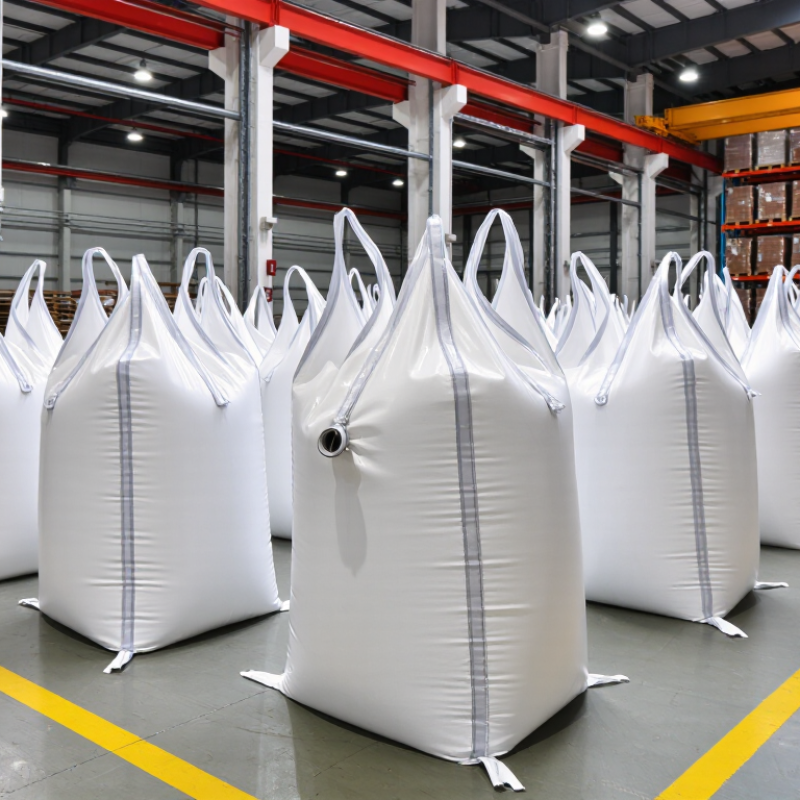
Baffle bag FIBCs are flexible bulk containers with internal fabric panels sewn between their outer walls. These baffles restrict side expansion, helping the bag remain square after filling. A conventional FIBC may bulge like a soft cushion. A baffle design behaves more like a stable cube. This geometry can improve pallet utilization by roughly 20–30%, depending on the product, bag dimensions, and filling method. Grand View Research estimated the global FIBC market at about USD 5.7 billion in 2023, with continued growth linked to agriculture, chemicals, food ingredients, and construction materials.
The working process is practical. Bulk material enters through a top spout, while the baffles distribute pressure across the four panels. The stronger shape supports closer stacking and reduces wasted space during warehouse storage. A bottom discharge spout then allows controlled emptying. ISO 21898 specifies performance requirements and testing for flexible intermediate bulk containers, including lifting, stacking, and safety considerations. Typical working loads range from 500 to 2,000 kilograms, but the safe rating depends on fabric strength, stitching, lifting loops, and filling conditions.
The square shape is not magic. Uneven filling can still make a bag lean. Poor baffle stitching can also reduce stability. For ODM projects, buyers should verify load tests, seam inspection records, liner compatibility, and repeated handling conditions. A lower quoted price may hide weaker fabric or less reliable stitching. That deserves a second look.

Baffle Bag FIBCs use internal fabric panels to maintain a square shape after filling. This design reduces bulging and improves pallet stability. According to Grand View Research’s 2024 analysis, the global FIBC market was valued at about USD 5.3 billion in 2023. Demand is rising as companies seek lighter, space-efficient bulk packaging.
Their practical advantage is clear in warehouses. A filled baffle bag can use vertical space more effectively than a conventional round bag. Depending on pallet size, loading patterns, and product density, space utilization may improve by roughly 20–30%. Flat panels also support cleaner stacking in trucks and storage areas. For powders, granules, minerals, agricultural materials, and food ingredients, laminated polypropylene can help limit moisture exposure. Food-contact applications still require documented material testing and controlled production.
Safety depends on more than appearance. Buyers should verify the safe working load, safety factor, lifting loops, seam strength, and discharge design. ISO 21898 provides a recognized framework for flexible intermediate bulk container performance. ODM production can tailor dimensions, inlet sizes, liners, and printing to specific handling systems. Yet customization is not automatically better. A narrow outlet may slow discharge, while an oversized liner can complicate filling. Testing with the actual material remains essential. This is where many specifications become imperfect.
China Top ODM Baffle Bag FIBC Manufacturers?
Chinese ODM manufacturers design baffle bags around load stability, storage efficiency, and the buyer’s handling method. Baffles are sewn across the bag’s inner corners. They help the filled container keep a more rectangular shape. This can improve warehouse use and reduce bulging during transport. Design begins with product weight, filling speed, discharge style, and lifting equipment. Engineers then select woven polypropylene fabric, coating options, liner structure, and loop positions. A small change in loop spacing can affect lifting balance. Samples are produced from technical drawings, not guesswork. The bag is filled and lifted under controlled conditions. Measurements reveal uneven stress and fabric distortion. Not every prototype performs well.
Production requires consistent sewing and careful inspection. Workers check baffle alignment, seam density, loop attachment, and discharge openings. They also inspect fabric surfaces for cuts, loose threads, or weak areas. Moisture protection is tested when the contents require it. Batch records connect raw materials with finished bags. This supports traceability and more reliable quality decisions. A good ODM process includes communication after sampling. Dimensions may need revision. Sometimes the first design is too rigid, too costly, or difficult to fill. That imperfection matters. It shows why practical factory feedback should guide the final construction. Experienced teams refine drawings, tooling, inspection points, and packing methods before regular production begins.
Evaluating a China-based FIBC manufacturer requires more than comparing prices. Check fabric weight, lifting-loop strength, seam quality, and stated safe working load. Ask for test records from a qualified laboratory, not only a factory-made report. Measurements should remain consistent across production batches.
A reliable supplier can explain its quality system clearly. Review material traceability, incoming inspections, sewing controls, and final random checks. Confirm whether production samples match approved specifications. For sensitive applications, request evidence for UV resistance, antistatic performance, or food-contact suitability. Requirements depend on the intended cargo and handling environment.
Tips: Visit the factory when possible. Watch fabric cutting, baffle installation, stitching, and packaging. Ask how rejected bags are isolated. A clean workshop helps, but it does not prove everything. I have found that small details, such as uneven stitching or weak labels, often reveal larger control problems. Certificates can become outdated, and sample results may not represent every shipment. Use an independent inspection before dispatch, and keep a written inspection plan. A practical trial order is still wise. Even experienced buyers can overlook a minor dimensional error.
Selecting the right Chinese ODM baffle bag supplier requires more than comparing prices. Start with your loading requirements, product density, filling method, and discharge process. Share exact dimensions, safe working load, safety factor, fabric weight, coating, seams, and baffle layout. A capable supplier should turn these details into a controlled drawing, not a vague quotation.
Ask for a physical sample before approving mass production. Check whether the bag stands evenly, keeps its shape, and fits your filling equipment. Inspect stitching around lifting loops, corner seams, inlet spouts, and discharge outlets. Details matter. Request fabric test reports, production records, and inspection procedures. A factory audit, live video review, or independent inspection can reveal storage conditions and sewing discipline. Certificates alone are not enough.
Evaluate the supplier’s ODM process carefully. Can its engineers adjust dimensions without weakening the baffles? Can it manage color, printing, packaging, and repeat orders consistently? Confirm lead times, sample charges, replacement terms, and communication responsibilities in writing. Ask who owns the final drawing and how revisions are controlled. Do not rush. A polished catalog may hide weak quality control, while a smaller factory may provide stronger technical attention. My own selection preference would include a paid pilot order, although this adds time and cost. That inconvenience can expose problems before larger production begins. Keep approval samples, inspection photos, and test results together for every order.

