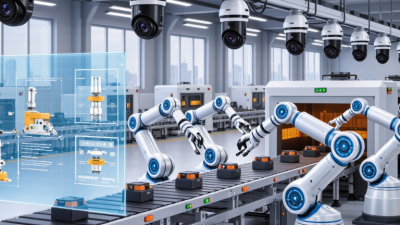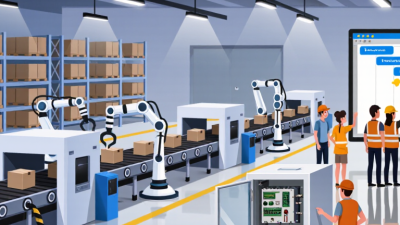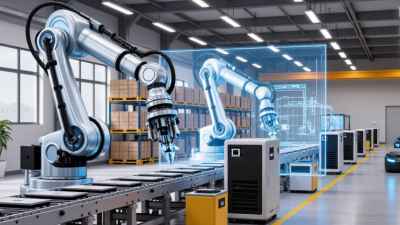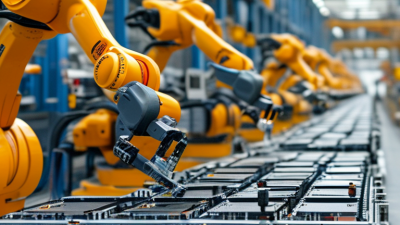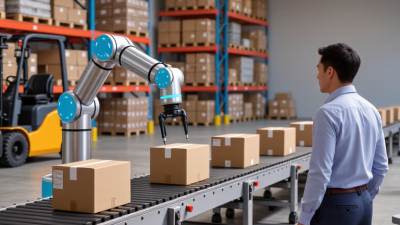



Global buyers are rethinking how work gets done. Automation products now support factories, warehouses, offices, farms, and service teams. A robotic arm can sort cartons beside a conveyor. Software can reconcile invoices before breakfast. Smart sensors can warn technicians about overheating motors. These examples show why automation is no longer limited to large industrial plants.
Yet choosing the right product requires more than comparing prices. Buyers should examine performance, integration, safety, maintenance, and supplier credibility. A low-cost machine may become expensive when spare parts arrive slowly or local technicians lack training. Total ownership costs matter. So does compatibility with existing equipment, software, and workplace skills. Regional certifications and data protection requirements also deserve careful attention. They can affect deployment timelines and customer trust.
This guide reviews leading categories for global purchasing decisions, including industrial robots, warehouse systems, process software, inspection tools, and intelligent control devices. Each category offers clear benefits, but none fits every operation. That is the difficult part. Real-world results depend on production volume, labor conditions, infrastructure, and management discipline. Buyers should request demonstrations, examine reference projects, and test products under realistic workloads. Vendor promises can sound convincing. Evidence is stronger.
The most reliable choice balances measurable productivity with long-term resilience. It should reduce repetitive work without creating hidden operational risks. Some recommendations may change as technology and regulations develop. That uncertainty deserves honest consideration. A careful evaluation helps global buyers invest confidently, responsibly, and with fewer unpleasant surprises.
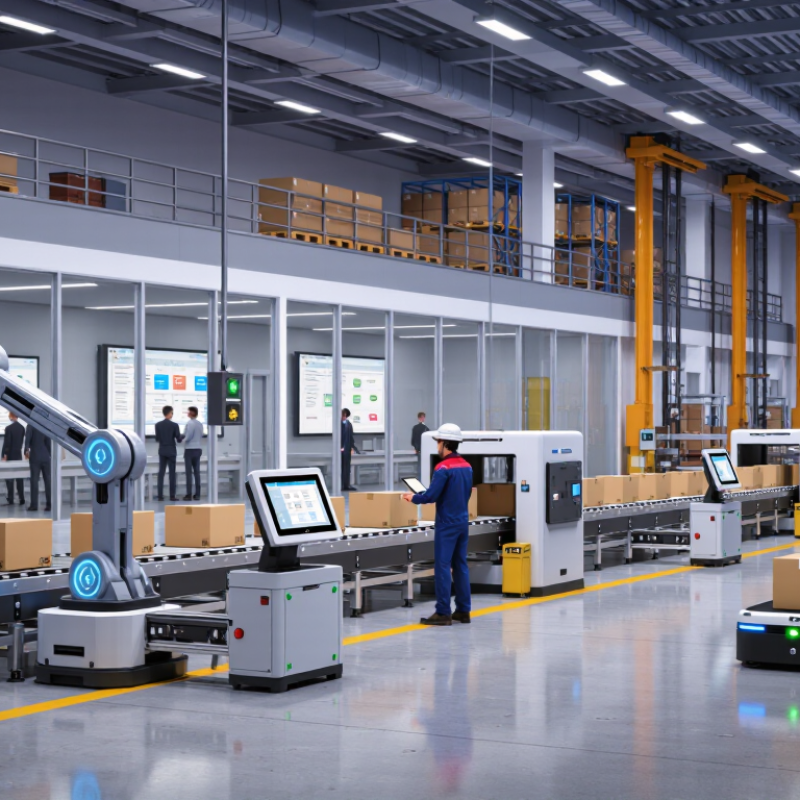
Automation products for global buyers include physical equipment, control software, data systems, and technical services that reduce repetitive human work. They range from industrial robots and machine-vision cameras to programmable controllers, automated storage systems, sensors, and workflow platforms. The category also includes installation, maintenance, cybersecurity, training, and integration support. The boundary is still fuzzy.
According to the International Federation of Robotics, 541,302 industrial robots were installed worldwide in 2023, while more than 4.28 million operated globally. These figures show that automation products are not limited to factory robots. A buyer may need a complete system, including safety guarding, connectivity, spare parts, and remote diagnostics. The McKinsey Global Institute has reported that automation could affect activities across almost every occupation, but adoption depends on cost, skills, and process readiness. That caution matters.
For global purchasing, scope should include compatibility with local voltage, communication protocols, safety standards, data rules, and after-sales coverage. A product that performs well in one plant may fail when technicians lack training or replacement parts arrive slowly. Buyers should compare total ownership cost, not only the catalog price. A practical evaluation might measure cycle time, error rates, energy use, downtime, and recovery speed. Some assumptions will be wrong. Pilot testing remains necessary.
| Product Category | Definition and Main Function | Typical Industrial Applications | Key Technical Dimensions | Global Buyer Priorities | Common Integration Requirements | Typical Supply Form |
|---|---|---|---|---|---|---|
| Programmable Logic Controllers (PLCs) | Industrial control computers that monitor inputs, execute programmed logic, and control machines or production lines in real time. | Assembly lines Packaging Water treatment Material handling | Number of digital and analog I/O points; processing speed; memory capacity; operating temperature; communication ports; safety level; enclosure and mounting format. | Local programming support, language compatibility, long-term spare-parts availability, cybersecurity features, electrical certifications, and compatibility with existing control systems. | Industrial Ethernet, serial communication, remote I/O, human-machine interface, variable-frequency drives, safety controllers, and supervisory control software. | Compact units for small machines, modular systems for production lines, and rack-based systems for larger installations. |
| Industrial Robots | Multi-axis programmable machines designed to perform repetitive, precise, or high-speed operations with limited direct human intervention. | Welding Palletizing Painting Machine tending | Number of axes; rated payload; maximum reach; repeatability; cycle time; mounting position; protection rating; controller capacity; and available end-of-arm tooling. | Payload-to-reach suitability, safety compliance, programming accessibility, installation support, total cost of ownership, and availability of tooling and replacement parts. | Robot controller, safety fencing or scanners, grippers, vision systems, conveyors, PLCs, and application-specific software. | Complete robot cells, standard robot arms, or application packages with controllers and tooling. |
| Collaborative Robots | Robotic systems designed to operate near people under defined safety conditions, commonly supporting flexible and low-volume production tasks. | Small-part assembly Inspection Packaging Light machine tending | Payload; reach; repeatability; number of axes; collision detection; safety-rated monitored stop; tool compatibility; setup time; and available operating modes. | Risk-assessment requirements, ease of redeployment, operator training, floor-space efficiency, integration with existing equipment, and suitability for changing production volumes. | End-of-arm tooling, safety devices, vision systems, PLC interfaces, conveyors, quick-change systems, and digital production software. | Robot arm packages, mobile collaborative stations, or application kits for assembly, inspection, and handling. |
| Machine Vision Systems | Camera-based inspection and measurement systems that capture images and use software to identify, classify, locate, or measure objects and defects. | Quality inspection Barcode reading Guidance Dimensional measurement | Image resolution; frame rate; field of view; lens type; lighting wavelength; processing capability; measurement accuracy; operating distance; and environmental protection. | Required inspection accuracy, lighting stability, data-processing speed, software usability, local technical support, and compatibility with production-line communication standards. | Cameras, lenses, lighting, image-processing software, industrial computers, PLCs, robots, reject mechanisms, and traceability databases. | Smart cameras, PC-based vision systems, 2D or 3D inspection systems, and customized inspection stations. |
| Variable-Frequency Drives | Electronic motor controllers that regulate motor speed and torque by adjusting the frequency and voltage supplied to an AC motor. | Pumps Fans Conveyors Compressors | Motor power and current rating; input voltage; output frequency range; overload capacity; efficiency; braking method; enclosure rating; harmonic performance; and control mode. | Regional voltage compatibility, energy-saving potential, motor compatibility, electromagnetic compatibility, heat dissipation, commissioning tools, and service availability. | Motors, PLCs, sensors, braking resistors, line reactors, disconnect devices, remote monitoring systems, and energy-management platforms. | Wall-mounted drives, cabinet-mounted drives, distributed drives, and packaged motor-control panels. |
| Industrial Sensors | Devices that detect physical or process conditions and convert them into electrical signals for monitoring, control, or safety functions. | Presence detection Temperature control Pressure monitoring Position sensing | Sensing range; accuracy; response time; repeatability; output type; supply voltage; ingress protection; temperature range; mounting method; and chemical resistance. | Measurement conditions, environmental durability, output compatibility, calibration requirements, replacement availability, and compliance with local electrical and safety standards. | PLCs, remote I/O, safety systems, data-acquisition equipment, process transmitters, industrial networks, and cloud or edge-monitoring platforms. | Proximity sensors, photoelectric sensors, temperature sensors, pressure transmitters, encoders, level sensors, and condition-monitoring devices. |
| Human-Machine Interfaces (HMIs) | Operator terminals that display process information and allow users to monitor, configure, and control industrial equipment. | Machine operation Alarm management Production monitoring Recipe control | Screen size; resolution; touch technology; processor performance; memory; communication ports; operating temperature; ingress protection; and user-access control. | Screen readability, multilingual support, cybersecurity, remote access policy, mounting dimensions, software licensing, and compatibility with PLCs and industrial protocols. | PLCs, SCADA systems, databases, remote I/O, barcode readers, drives, robots, and factory networks. | Panel-mounted touch terminals, industrial monitors, portable operator panels, and embedded visualization systems. |
| SCADA and Industrial Monitoring Software | Software platforms used to supervise processes, collect operational data, manage alarms, and provide historical or real-time visualization. | Utilities Process plants Energy monitoring Multi-site operations | Tag capacity; data-update rate; historian storage; alarm-management functions; user access levels; redundancy; reporting tools; cybersecurity; and supported protocols. | Scalability, data ownership, subscription or perpetual licensing, remote-access security, integration with enterprise systems, local compliance, and technical support. | PLCs, RTUs, sensors, industrial gateways, databases, manufacturing-execution systems, enterprise-resource-planning systems, and analytics platforms. | On-premises installations, edge deployments, private-cloud systems, or hybrid monitoring architectures. |
| Automated Guided Vehicles and Autonomous Mobile Robots | Mobile platforms that transport materials through facilities using programmed routes, navigation sensors, or autonomous mapping technology. | Warehouse transport Line feeding Pallet movement Intralogistics | Payload; vehicle dimensions; battery capacity; operating time; charging method; navigation accuracy; travel speed; turning radius; safety sensors; and floor requirements. | Facility layout, traffic-management capability, safety certification, fleet scalability, battery lifecycle, integration with warehouse systems, and after-sales maintenance. | Fleet-management software, warehouse-management systems, manufacturing-execution systems, automatic charging stations, elevators, conveyors, and safety infrastructure. | Pallet carriers, cart-towing vehicles, shelf-moving robots, bin-handling robots, and customized mobile platforms. |
| Pneumatic and Electric Actuators | Motion devices that convert compressed air or electrical energy into linear or rotary mechanical movement. | Clamping Positioning Material handling Valve operation | Stroke or rotation angle; force or torque; speed; positioning accuracy; duty cycle; load capacity; operating pressure or voltage; environmental rating; and service life. | Required motion profile, energy consumption, maintenance needs, installation space, spare-parts compatibility, response time, and total operating cost. | Valves, sensors, controllers, pneumatic preparation units, servo drives, PLCs, grippers, mechanical guides, and safety circuits. | Cylinders, rotary actuators, servo actuators, electric linear modules, compact positioning stages, and complete actuator assemblies. |