






Choosing the right Adss Clamp manufacturer can affect installation speed, cable stability, and long-term maintenance. This guide introduces ten manufacturers serving the ADSS hardware market. It is intended as a practical starting point, not a universal ranking. Very different needs exist.
A dependable clamp should match the cable diameter, span conditions, and required holding strength. Buyers should also examine material quality, corrosion protection, production consistency, and available test documentation. Small details matter: a smooth contact surface can help reduce cable damage, while clear packaging labels can prevent confusion on site. Ask manufacturers for drawings, dimensional tolerances, and samples when possible. Then compare their answers against your project specifications. Not every catalog tells the full story.
The companies featured here are considered through product range, manufacturing capability, technical support, and market visibility. These factors can help narrow the search, but they do not replace independent verification. Check current specifications directly with each supplier, since product options and lead times may change. A familiar name is not enough. Nor is a low quote. One limitation deserves attention: public information may not reveal every difference in factory quality or service. Careful follow-up remains necessary. For contractors, distributors, and network planners, this overview offers a clearer way to compare potential partners and ask sharper questions before making a purchase.
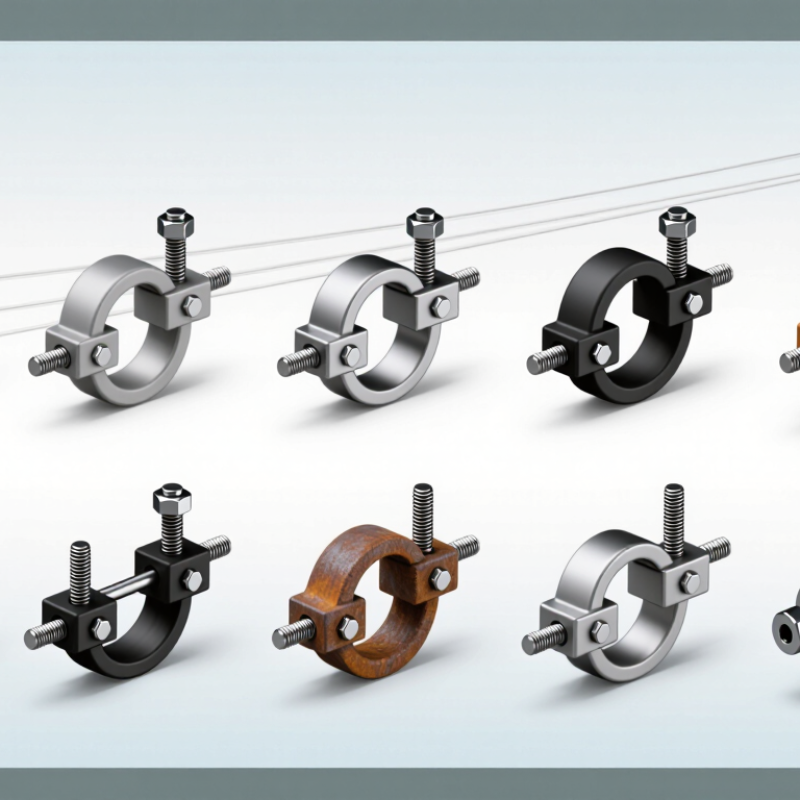
China Top 10 ADSS Clamp Manufacturers
Understanding ADSS Clamps and Their Role in Fiber-Optic Networks
ADSS clamps secure all-dielectric self-supporting fiber cables to poles and towers without using a metallic messenger wire. They help manage cable tension and keep the line positioned through changing weather. Suspension clamps support the cable along a route, while dead-end clamps hold it firmly at a termination or angle. The right type depends on the cable design, span length, and installation conditions. Small details matter.
A clamp should match the cable’s diameter and outer jacket. Excessive pressure may deform the jacket; too little grip can allow movement. Installers should also consider the cable’s specified bend radius, expected wind or ice loading, and the pole hardware. These choices are site-specific, so manufacturer data and qualified engineering review are more reliable than guesswork. Field conditions can still surprise you.
Tips: Check cable diameter and clamp compatibility before installation. Inspect contact surfaces for sharp edges, and confirm the cable sits evenly in the gripping area. After installation, look for slipping, pinching, or unusual deformation. Do not guess. A careful visual check can catch problems early, though it cannot replace a proper tension assessment.
| ADSS Clamp or Fitting Type | Typical Installation Point | Primary Role | Load or Cable Interaction | Key Selection Consideration |
|---|---|---|---|---|
| Suspension Clamp | Intermediate pole or tower on a route section | Supports the cable while allowing it to continue along the line | Transfers cable weight and applicable environmental loads to the support structure | Match the clamp to the cable diameter, support geometry, and line design; avoid excessive pressure on the cable. |
| Helical Suspension Set | Intermediate supports, where specified by the line design | Provides a shaped support around the cable at a suspension point | Distributes contact over a longer cable area than a narrow contact point | Use a set designed for the cable’s diameter and construction; follow the specified installation procedure. |
| Dead-End Tension Clamp | Route ends, major direction changes, or designated tension points | Anchors the ADSS cable and holds longitudinal tension | Transfers cable tension to the pole or tower through the associated hardware | Check the required holding capacity, cable type, and line tension for the specific installation. |
| Preformed Dead-End Grip | At an anchoring point on the cable | Forms a cable-specific grip for a dead-end arrangement | Applies gripping force along a shaped contact area | Select by cable diameter and manufacturer-approved application; do not substitute a grip intended for another cable. |
| Short-Span Anchor Clamp | Short-span sections or service-drop anchoring points, when specified | Secures the cable at a designated termination or attachment point | Holds the cable using a design suited to its intended load range | Confirm that the fitting is rated for the actual cable and installation loads rather than relying on appearance alone. |
| Downlead Clamp | Along a pole or tower where cable runs vertically | Guides and secures the cable during a vertical transition | Supports the cable locally without serving as a line-tension anchor | Choose compatible cable-contact materials and spacing in accordance with the project design. |
| Slack Storage Bracket or Clamp | Pole or tower near a splice or maintenance location | Stores reserve cable in an organized loop for maintenance access | Supports stored slack; it is not a substitute for a suspension or dead-end fitting | Maintain the cable’s specified minimum bend radius and avoid tight bends or pinching. |
| Cable Protection Sleeve or Armor Rods | At selected support or contact locations, where required | Helps protect the cable surface from abrasion or localized contact | Provides a protective interface; its role depends on the fitting system | Use only protection components approved for the cable and associated clamp assembly. |
| Pole-Mounting Bracket | Between the clamp assembly and a pole or other support structure | Connects the cable fitting to the supporting structure | Transfers fitting loads into the pole or tower attachment | Verify structural compatibility, attachment method, corrosion environment, and required clearances. |
| Link Plate or Clevis Assembly | Between an anchoring or suspension fitting and its support bracket | Provides a mechanical connection and, where designed, articulation | Transmits load through the hardware assembly | Check load rating, pin size, connection compatibility, and the intended direction of loading. |
Selection note: ADSS fitting suitability depends on the cable diameter and construction, span, installation tension, wind and ice loading, support structure, and the project design. Confirm product ratings and installation instructions for the specific cable and route; the entries above describe common fitting functions, not universal specifications.
