






Choosing Aluminium casement door & windows is about more than frame colour or a smooth handle. These units must manage weather, daylight, ventilation, security, and everyday use. The U.S. Department of Energy’s Energy Saver guidance notes that heat gain and heat loss through windows account for about 25–30% of residential heating and cooling energy use. That figure makes glazing and frame performance practical concerns, not showroom details. Small details matter.
Start with the opening itself. Measure the reveal carefully, and check how a casement sash will swing beside paths, curtains, or furniture. Compare the whole-window U-factor and solar heat gain coefficient, rather than judging glass by appearance alone. The National Fenestration Rating Council (NFRC) provides independent product ratings that help buyers compare these values. Also ask about thermal breaks, weather seals, drainage paths, hardware, and finish warranties. A slim frame may look elegant, yet poor sealing can undermine comfort. Not always obvious.
This guide presents ten tips for making a more informed choice, from checking profiles and glazing to reviewing installation and after-sales support. Ask suppliers for documented specifications and examples of comparable projects; vague claims are hard to verify. Consider your climate, room orientation, and how often the doors will be used. A good specification still cannot fix poor installation. And one honest caveat: no single frame or glass option suits every home. The right choice depends on the opening, the exposure, and the people using it.
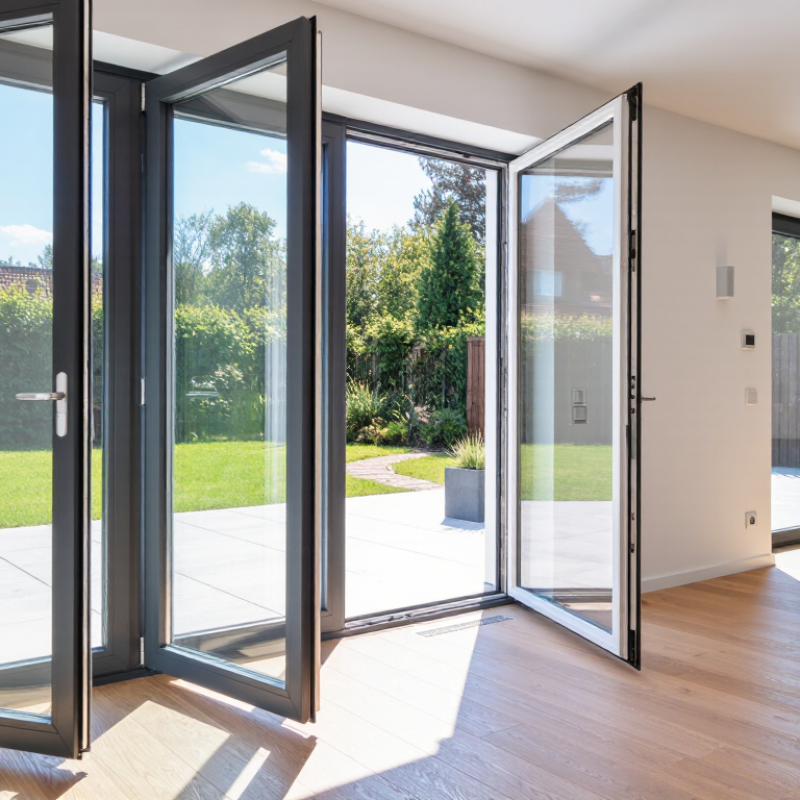
Start with the clear opening, not a rough wall measurement. Measure the width and height in several places; older frames are rarely perfectly square. Casement sashes swing outward, so check nearby walkways, planting beds, screens, and furniture. A handle may even hit a deep countertop. Small detail, big frustration.
Let the local climate guide the frame, glazing, and seals you consider. In coastal air, ask about corrosion-resistant finishes and hardware. In windy areas, confirm that the proposed system has suitable tested ratings for wind pressure and water penetration. Cold winters or hot summers make thermal performance important; compare whole-window U-factors and look for a thermal break in the aluminium frame. Better insulation helps, but glass and installation matter too. No single feature does it all.
Decide what the room needs most: quieter nights, controlled ventilation, easier cleaning, or stronger resistance to drafts. For a bedroom facing traffic, compare acoustic ratings rather than relying on thicker glass alone. Ask for documented test results and installation details, then check that they suit your opening and local conditions. It is easy to focus on frame colour and overlook sealing. I would. Yet a well-made window can still disappoint if the fitting leaves gaps.

Start with the alloy and temper, not a vague “premium” label. Aluminium 6063 is common for architectural profiles, while T5 and T6 describe different heat-treatment conditions. Ask for the exact specification and supporting test data. Strength matters, but so do coating quality, drainage paths, and hardware, especially where rain or salty air is common. Details matter. A strong alloy cannot compensate for poor water management.
Compare profile depth, wall thickness, and frame construction together. A thermal-break profile uses an insulating barrier between its inner and outer sections, which can reduce heat transfer. Check the break’s dimensions and the system’s whole-window thermal data, not just the frame material. For casement units, consider hinge capacity and sash size; a large glazed sash places real loads on both. A deeper frame is not automatically better. It may improve rigidity, yet reduce glass area or daylight. I would also compare sightlines and the space needed for the sash to open. Ask for air, water, and wind test results for the specific frame and glazing combination. Specifications can look reassuring, but the installed details still deserve scrutiny.
When comparing aluminium casement doors and windows, look beyond the number of glass panes. Double glazing is often suitable for everyday homes, while triple glazing may help in colder climates. A low-emissivity coating can reduce heat transfer, but the right choice also depends on window orientation and summer sun. Ask for the whole-window U-value, not just the glass specification. Small detail, big difference.
Thermal performance depends on the frame and installation as well as the glazing. Aluminium frames with thermal breaks help limit heat flow through the metal. Check that weather seals sit evenly, especially at the opening corners. A useful check is to close the sash on a strip of paper; if it slips out easily, the seal may need adjustment. It is not a laboratory test, of course. Condensation can still appear in a poorly ventilated room, so no window alone can solve every moisture problem.
Security deserves the same careful inspection. Look for multipoint locking that engages firmly, robust hinges, and handles that cannot be lifted into an open position from outside. Laminated glass can remain more intact after impact, while toughened glass breaks into smaller pieces; their benefits differ. Ask to operate a sample unit. A lock that feels awkward during a showroom visit may be frustrating every day.
| Tip | What to Evaluate | What to Look For | Questions to Ask | Useful Evidence |
|---|---|---|---|---|
| 1. Compare whole-window U-values | Heat transfer through the complete window or door unit. | A tested whole-product U-value in W/m²·K; a lower value generally means less heat loss. Compare like-for-like sizes and configurations. | Is this the whole-unit value or only the centre-of-glass value? Does it apply to the size and opening style quoted? | Product data sheet or test report stating the unit size, configuration, and calculation or test method. |
| 2. Choose glazing for the climate and orientation | Glass build-up, heat loss, solar gain, and daylight. | Double or triple glazing as appropriate; low-emissivity coatings and gas-filled cavities can improve insulation. Solar-control glass may help manage strong sun. | What are the glazing U-value and solar heat gain coefficient (SHGC or g-value)? Is the glass suited to this window's orientation? | Glazing specification identifying pane count, coating, cavity fill, U-value, and solar-gain rating. |
| 3. Check for a thermally broken frame | The aluminium frame's resistance to heat flow. | A thermal break separates the interior and exterior aluminium sections with a lower-conductivity material, reducing heat transfer through the frame. | Does the quoted system include a thermal break? Is its performance included in the whole-product rating? | Section drawings and verified performance figures for the complete frame and glazed unit. |
| 4. Review air leakage and weather resistance | Sealing against drafts, wind-driven rain, and pressure differences. | Look for tested air-permeability, water-resistance, and wind-load classifications under a recognized standard applicable in your region. | Were the ratings tested on this opening type and size? Are the results suitable for local exposure and building requirements? | Current third-party test results or a product declaration listing the standard and classification. |
| 5. Examine locking and hinge security | Resistance to forced entry at the opening edge and hinges. | Consider multipoint locking, robust keeps, secure hinge-side protection, and hardware designed for the specific sash or door size. | How many locking points are provided? Are the hinges and keeps protected when the unit is closed? | Hardware schedule and, where required, an independently tested security classification accepted locally. |
| 6. Consider laminated or security-rated glass | Glass breakage behavior and resistance to penetration. | Laminated glass holds fragments together after breakage; the appropriate glass type depends on location, safety rules, and the security objective. | Is safety glazing required here? Does the proposed glass meet the relevant impact or security standard? | Glass make-up and compliance documentation for applicable safety-glazing requirements. |
| 7. Match the opening style to the room | Ventilation, access, clearance, and operation. | Casement sashes open outward or inward depending on design. Check nearby paths, furniture, screens, wind exposure, and emergency-egress requirements. | Which way does the sash open? Will it obstruct a walkway or be easy to reach and operate? | Dimensioned drawings showing handing, clear opening, and any required escape opening. |
| 8. Verify drainage and condensation details | Moisture management and performance at frame edges. | Check that drainage paths and weep openings are correctly designed and kept clear. Warm-edge spacers can reduce heat flow around the glass edge. | How is water drained from the frame? What installation details help limit condensation at the frame and glass edges? | System drawings, glazing details, and installation guidance for drainage and perimeter sealing. |
| 9. Assess finish and maintenance requirements | Durability of the coating and care needed over time. | Confirm the coating type, care instructions, and suitability for the property's environment. Coastal or industrial exposure may call for specific finish guidance. | What cleaning products are safe? What finish-care and warranty conditions apply? | Written maintenance instructions and warranty terms for the finish and hardware. |
| 10. Confirm installation and aftercare | How the unit is measured, fitted, sealed, adjusted, and supported. | Correct installation is essential to achieving the intended airtightness, weather resistance, operation, and security of the complete assembly. | Who is responsible for installation? Are adjustment, repair, and warranty support clearly documented? | Installation specification, completion checklist, warranty documentation, and service contact details. |
Note: Performance ratings and compliance requirements vary by product configuration, test method, and location. Verify current local building and safety requirements before ordering.
When choosing aluminium casement doors and windows, operate each handle several times. It should turn smoothly without scraping or excessive force. Check that hinges feel secure and the sash stays open at different angles. Small defects matter. Ask whether locks, hinges, and weather seals can be replaced individually, and whether replacement parts will remain available. A smooth showroom sample is useful, but it cannot reveal how hardware behaves after months of daily use.
Finish affects both appearance and maintenance. Inspect a large sample outdoors, not just under warm indoor lighting. Look for an even colour, clean corners, and consistent coating around joints. Dark finishes can become noticeably hot in direct sun, while dust may show more clearly on some colours. Ask how the coating should be cleaned and which products could damage it. I would avoid assuming every finish ages identically; exposure and upkeep make a difference.
Installation deserves careful attention. The frame must sit square and level, with suitable sealing around the opening. Ask who measures the opening, who installs the unit, and how the installer handles drainage and insulation. Take photos before interior trim hides the edges. Not glamorous, but useful. Read the warranty for coverage periods, exclusions, and requirements for routine care. Confirm whether labour, glass, hardware, and finish are covered separately, and keep the written terms with your purchase records.
When comparing aluminium casement doors and windows, look beyond the purchase price. Ask for the full installed cost, including glazing, hardware, finishing, and any needed frame adjustments. The U.S. Department of Energy estimates that heat gain and loss through windows account for 25–30% of residential heating and cooling energy use. That makes the glass and frame design worth checking closely.
A thermally broken frame can reduce heat transfer, while suitable glazing helps match performance to your climate. Compare rated U-factor and solar heat gain coefficient, not just the number of panes. Small details matter. Check that locks operate smoothly and seals sit evenly; poor installation can undermine a well-specified unit. Maintenance is usually straightforward, but exposed coastal sites may need more frequent cleaning to remove salt deposits. I would not assume every aluminium frame needs the same care.
Long-term value also depends on repairability. Ask whether hinges, handles, and weather seals can be replaced without removing the whole unit. The International Aluminium Institute reports that recycling aluminium uses about 95% less energy than producing primary aluminium, but that figure does not guarantee a specific window will be recycled. Ask about local collection options and the product’s material information. That is a useful, practical question.
Routine maintenance helps protect performance and long-term value. The chart shows general planning frequencies, not requirements for every product or climate.
Typical routine: clean frames and glass quarterly; clear drainage paths twice a year; inspect hardware and weather seals annually. Follow the product manufacturer’s care instructions, especially in coastal or harsh environments.

