






Choosing an Electric Coolant Heater is a practical decision, not merely a specification exercise. The International Energy Agency reported that global electric car sales exceeded 17 million in 2024, representing more than one in five new cars sold. This growth increases demand for reliable cabin heating, battery preheating, and powertrain temperature control. A suitable heater must match voltage, heat output, coolant flow, packaging space, and control-system compatibility.
Cold weather exposes weak choices quickly. The U.S. Department of Energy notes that low temperatures can reduce electric-vehicle efficiency and driving range, while extra cabin heating increases energy consumption. In a parked vehicle, a coolant heater can warm the battery and passenger compartment before departure. That may improve comfort and reduce early-trip power demand. Still, results vary with insulation, software calibration, ambient temperature, and battery chemistry. A neat spreadsheet cannot predict every winter.
Dr. Andreas Wuppinger, a thermal-management specialist, has described the principle this way: “Thermal management is the key to vehicle efficiency.” His observation supports a broader engineering view. Buyers should examine response time, continuous output, coolant compatibility, diagnostic functions, and protection against dry running. SAE J1634 testing principles can help compare vehicle efficiency, but they do not replace application-specific validation. A compact 5-kilowatt unit may suit one platform and fail another. That is easy to overlook. The following guide explains how to compare Electric Coolant Heater options with evidence, practical installation details, and realistic expectations. Jiova
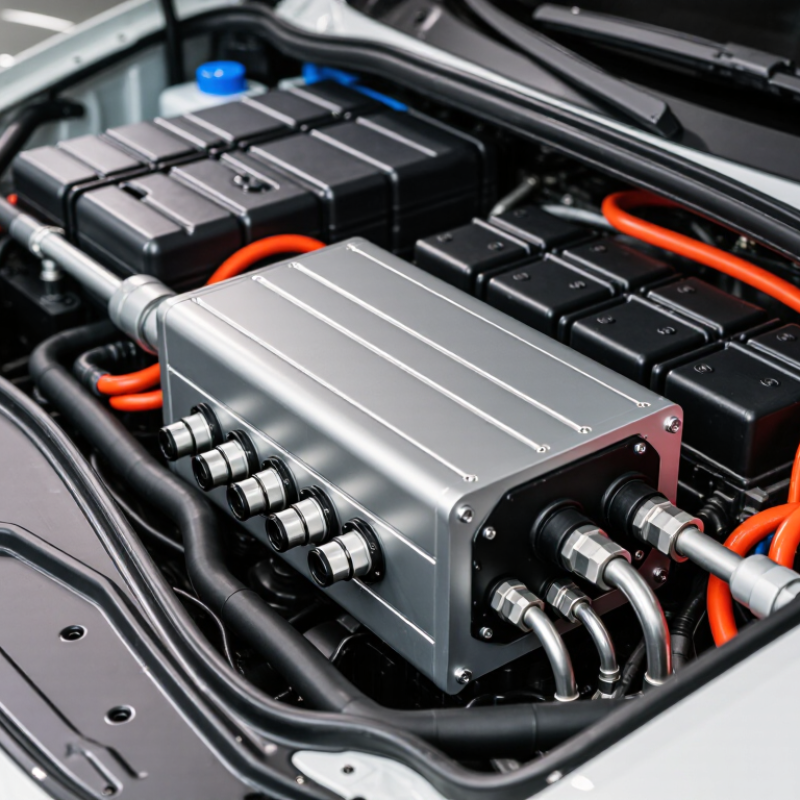
An electric coolant heater is a compact heating unit installed within a vehicle’s thermal-management circuit. It warms a water-glycol mixture instead of heating air directly. A pump then moves the heated coolant through the battery, cabin heat exchanger, or power electronics.
Most units use positive temperature coefficient ceramic elements. Electricity passes through the elements, producing controlled heat. As temperature rises, electrical resistance increases naturally. This helps limit overheating. The vehicle controller adjusts power according to coolant temperature, battery demand, and cabin settings. The basic explanation sounds simple, but real systems involve sensors, valves, pumps, and software.
The need is growing. The International Energy Agency reported more than 14 million electric car sales worldwide in 2023, representing about 18% of new car sales. Cold weather remains important. The U.S. Department of Energy notes that low temperatures can reduce electric-vehicle range because heating consumes additional energy. When choosing a heater, match its voltage, power rating, coolant flow, connector design, and control protocol with the vehicle. A 400-volt system cannot safely use a unit designed for a 24-volt circuit. Check insulation, leak resistance, operating temperature, and relevant electrical safety testing. Physical size matters too. A heater that fits on paper may obstruct hoses in practice. That detail is easy to miss. Heating speed, standby consumption, and service access also deserve comparison. A higher wattage is not always better. It may increase battery load without improving comfort or charging efficiency.

Choosing the right electric coolant heater starts with the vehicle or system architecture. A 12-volt inline heater suits small engines, cabins, and compact cooling loops. Heavy vehicles often need 24- or 48-volt units. High-voltage PTC heaters fit battery-electric platforms with high electrical demand. Immersion heaters work well inside tanks or battery cooling plates. Contact heaters can warm metal housings directly, but installation must match the surface.
Cold conditions make this choice practical, not theoretical. U.S. Department of Energy testing indicates that low temperatures can reduce electric vehicle range by roughly 32% at 20°F, especially when cabin heating operates. The IEA Global EV Outlook 2024 reported nearly 14 million electric cars sold worldwide in 2023.
More vehicle designs now need different thermal solutions. Check coolant volume, hose diameter, voltage, power rating, and available mounting space. A heater that warms quickly may still overload the electrical system. That detail is easy to miss.
Tips:
Measure first. Confirm flow direction. Select a thermostat with accurate temperature control. For battery systems, follow the manufacturer’s temperature limits and use compatible coolant.
In my experience, installers sometimes choose maximum wattage too quickly. Higher output is not always better. It can create hot spots, shorten component life, or waste energy.
Review cold-start data, not only the product label. If the system has unusual plumbing, a thermal engineer should verify the installation.
Choosing an electric coolant heater starts with a heat balance, not a catalogue number. Measure coolant volume, target temperature, starting temperature, and warm-up time. For a stationary tank, use Q = m × Cp × ΔT, then divide Q by time. Water-based coolant has a specific heat near 4.18 kJ/kg·°C, but glycol mixtures differ. Check the actual mixture. That detail matters.
For circulation, use P = mass flow rate × Cp × temperature rise. Add heat lost through hoses, tank walls, and airflow. A practical field estimate often adds 15–30 percent, but insulation can change that margin. My first estimates were too neat. Real cold starts, pump losses, and sensor delay increased demand. Record warm-up data when possible. It provides stronger evidence than a spreadsheet alone.
Determine voltage from the available supply, such as 12, 24, 48, 120, or 230 V. Confirm whether the system uses AC or DC. Current follows I = P ÷ V. A 2,000 W heater draws about 83 A at 24 V, but only 8.7 A at 230 V. Wiring, fuses, relays, connectors, and batteries must handle the load continuously. Match the heater to the machine’s electrical system. Verify grounding, insulation, temperature control, and overheat protection. Leave room for mistakes. A qualified electrician should review the installation against local requirements.
Required heating power and 24 V supply current for a water-based coolant system
Calculation basis: water-based coolant with a specific heat capacity of 4.18 kJ/kg·°C, a 40°C temperature increase, a 20-minute heating time, and 15% allowance for heat losses. Required power = mass × specific heat × temperature rise ÷ heating time × 1.15. At 24 V, supply current = heating power × 1,000 ÷ 24. Select a heater and power supply with suitable reserve capacity.
An electric coolant heater must match the vehicle’s voltage, coolant circuit, and thermal demand. A larger unit is not automatically safer. IEA’s Global EV Outlook 2024 reported nearly 14 million electric car sales in 2023, increasing demand for dependable thermal systems. That scale makes installation discipline more important.
Check for independent temperature sensing and an automatic thermal cutoff. Overcurrent protection matters. Galvanic isolation is also valuable in high-voltage systems. The heater should state its operating voltage, maximum current, pressure range, and compatible coolant. Look for an enclosure tested against water and dust ingress, such as an appropriate IP rating under IEC 60529. ISO 16750 testing is useful evidence for vibration, temperature, and electrical stress, although certification alone does not guarantee a correct installation. Read the test scope carefully.
Mount the heater where coolant can flow naturally and service access remains practical. Avoid sharp bends, exhaust heat, and points that can trap air. The installation should include secure brackets, correctly rated wiring, sealed connectors, and a fuse near the power source. Follow the manufacturer’s bleeding procedure, then inspect for leaks after a cold and hot cycle. I would not rely on a dashboard warning alone. A modest sensor fault can become an expensive failure. The weak point is often the installation, not the heater.
Choosing an electric coolant heater starts with real operating conditions, not a large efficiency number. Compare thermal output, energy consumption, warm-up time, and heat losses from hoses or exposed fittings. Most electric heaters convert electricity into heat efficiently at the unit, but the complete system may perform differently. Cold starts, long cable runs, and poor insulation can reduce practical efficiency. Request test data at your expected voltage, coolant flow, and ambient temperature. A higher output is not always the better choice.
Controls deserve equal attention. A stable thermostat, accurate temperature sensor, and adjustable operating range can prevent overheating and wasted energy. Automatic shutdown, fault alerts, and clear diagnostic codes improve daily reliability. Check whether the heater can communicate with the vehicle or equipment control system. Sensor placement matters more than many product sheets admit. A sensor near the outlet may read warm while the engine remains cold. Test the response before installation is finalized.
Durability depends on vibration resistance, sealing, corrosion protection, and material quality. Look for documented temperature limits and environmental protection ratings. Maintenance should involve simple coolant checks, electrical connection inspections, and accessible service points. Ask for recommended inspection intervals and replacement procedures. Keep a record of faults and start-up times. In practical evaluations, easy access often saves more money than a slightly lower purchase price. I once focused too heavily on efficiency and underestimated connector wear. That mistake changed my selection criteria. No rating tells the whole story.
| Heater Type | Typical Power Range | Typical Heating Efficiency | Control Options | Temperature Regulation | Durability Considerations | Maintenance Needs | Best-Suited Applications | Key Limitations |
|---|---|---|---|---|---|---|---|---|
| PTC Air Heater | 500 W–5 kW | High Self-regulating ceramic elements reduce the risk of overheating and typically provide efficient air heating. | On/off control, PWM control, thermostat input, or CAN-based control in vehicle systems. | Good for cabin or enclosure air; response is generally fast because the heated medium is air. | Solid-state ceramic elements are resistant to thermal shock. Fan bearings and dust exposure are the main durability concerns. | Keep air passages clean, inspect the fan, and check electrical connectors. Usually no coolant draining is required. | Passenger compartments, battery enclosures, electronics cabinets, and low-volume air spaces. | Does not directly heat liquid coolant and may be unsuitable where uniform coolant temperature is required. |
| Immersion Resistance Heater | 1–15 kW | High Electrical resistance heating converts nearly all supplied electrical energy into heat at the element. | Thermostat, relay, solid-state relay, staged power, or proportional controller. | Good when the element is correctly submerged and coolant circulation is adequate; local hot spots are possible without flow. | Heating elements can last for years when operated within their rated temperature and voltage. Corrosion and dry-running can shorten service life. | Inspect wiring, seals, insulation, coolant level, and element condition. Flush or replace coolant according to the system schedule. | Engine preheating, stationary equipment, hydraulic systems, tanks, and moderate-size coolant loops. | Requires proper installation depth and flow. A dry element can overheat rapidly and may cause damage. |
| Inline Circulation Heater | 2–30 kW | High Directly heats flowing coolant and can distribute heat throughout a closed loop. | Thermostatic control, PID control, staged switching, PWM, or vehicle communication networks. | Very good when paired with a correctly sized pump, flow sensor, and temperature sensor. | Durability depends on flow stability, pressure rating, sealing quality, and protection against cavitation and overheating. | Check pump operation, hoses, clamps, seals, electrical terminals, coolant quality, and trapped air in the loop. | Battery thermal management, industrial coolant circuits, fuel systems, and high-power preheating. | More components and installation work than a simple immersion heater; inadequate flow can cause rapid overheating. |
| High-Voltage Coolant Heater | 3–30 kW | High Designed for direct coolant heating in high-voltage vehicle and energy-storage systems. | CAN communication, PWM control, enable signal, diagnostics, and integrated over-temperature protection. | Excellent when integrated with temperature sensors, coolant pumps, and a thermal-management controller. | Requires high-voltage insulation, sealed connectors, electrical isolation monitoring, and protection against moisture ingress. | Routine service is limited, but technicians should inspect insulation resistance, connectors, coolant leaks, fault codes, and circulation. | Electric vehicles, hybrid vehicles, charging systems, and high-voltage battery packs. | Higher system cost and stricter installation and safety requirements; servicing should be performed by qualified personnel. |
| Low-Voltage Silicone-Pad or Surface Heater | 50–1,000 W | Moderate to High Efficient for localized heating, but heat transfer depends strongly on surface contact and insulation. | Thermostat, thermistor, timed relay, or simple temperature switch. | Good for maintaining the temperature of small tanks, pipes, or housings; not intended for rapid bulk-fluid heating. | Flexible construction tolerates vibration, but repeated bending, abrasion, moisture, and excessive surface temperature can cause failure. | Inspect adhesion, cable strain relief, insulation, surface condition, and thermostat operation. | Small reservoirs, pipes, battery packs, outdoor enclosures, and freeze protection. | Limited heating capacity and uneven performance if the heater is poorly bonded or the surface is dirty or irregular. |
Note: Power ranges and efficiency ratings are typical engineering guidelines rather than universal specifications. Final selection should consider coolant type, flow rate, ambient temperature, voltage, available power, pressure rating, safety requirements, and the required warm-up time.

