






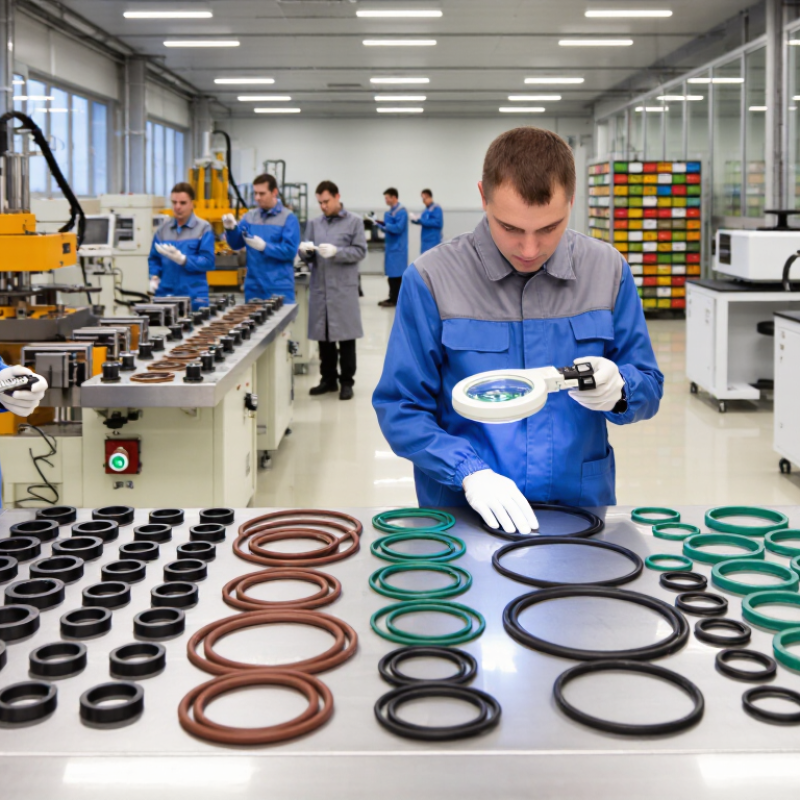
An OEM rubber seal O-ring factory converts a drawing into a controlled sealing system. Its work starts with design review, not molding. Engineers check groove dimensions, pressure, temperature, media, and installation stretch. They may recommend EPDM, NBR, FKM, or silicone compounds for different operating conditions. Material choice is not decoration.
The 2024 MarketsandMarkets O-Ring Seals Market report forecasts about 6.5% annual growth through 2029. This demand raises the need for repeatable production. A capable factory mixes rubber by controlled recipes, builds dedicated molds, and records curing temperature and time.
Operators then remove flash, inspect surface defects, measure section diameter, and verify dimensions against ISO 3601 requirements. Critical orders may receive compression-set, tensile, leakage, and aging tests. Each batch should carry traceable lot records.
Small details matter. A seal can look perfect and still fail after heat exposure. The 2024 Fortune Business Insights rubber seals analysis identifies automotive and industrial equipment as major demand sectors, where such failures can stop an assembly line. OEM factories therefore create samples, run first-article validation, and adjust tooling before mass production. In practice, drawings sometimes omit real installation conditions. Engineers must ask better questions. No factory gets every first trial perfect. Reliable suppliers document the mistake, correct the cause, and protect the next shipment with clearer inspection limits.
