






Choosing makeup packaging for global buyers in 2026 requires more than attractive color and shape. It requires evidence, testing, and regional awareness.
McKinsey & Company estimates that the global beauty market could reach approximately $590 billion by 2028. That growth increases pressure on brands, retailers, and packaging suppliers. Grand View Research also reports continued expansion in the global cosmetic packaging market through 2030. However, forecasts use different methods. They should guide decisions, not replace market validation.
Real buyer experience matters. A pump that works in a controlled showroom may fail after air freight, temperature changes, or repeated bathroom use. Glass can communicate luxury, yet heavier shipping increases handling costs and emissions. Recycled plastic may support sustainability goals, but inconsistent color can challenge premium positioning. Small details matter. Think of a cap, hinge, seal, and label.
David Luttenberger, Global Packaging Director at Mintel, has stated, “Packaging is the most tangible expression of a brand.” That principle remains practical for makeup packaging buyers. The pack must protect the formula, communicate trust, and perform across markets. Buyers should request compatibility testing, drop testing, migration documentation, and clear material specifications. They should also review recycling guidance for each target country.
A perfect package does not exist. Some choices still involve compromise. The strongest 2026 strategy balances appearance, usability, verified sustainability claims, supply reliability, and total delivered cost. This article examines those decisions through a global buyer’s lens, with practical questions for suppliers, designers, and beauty brands.
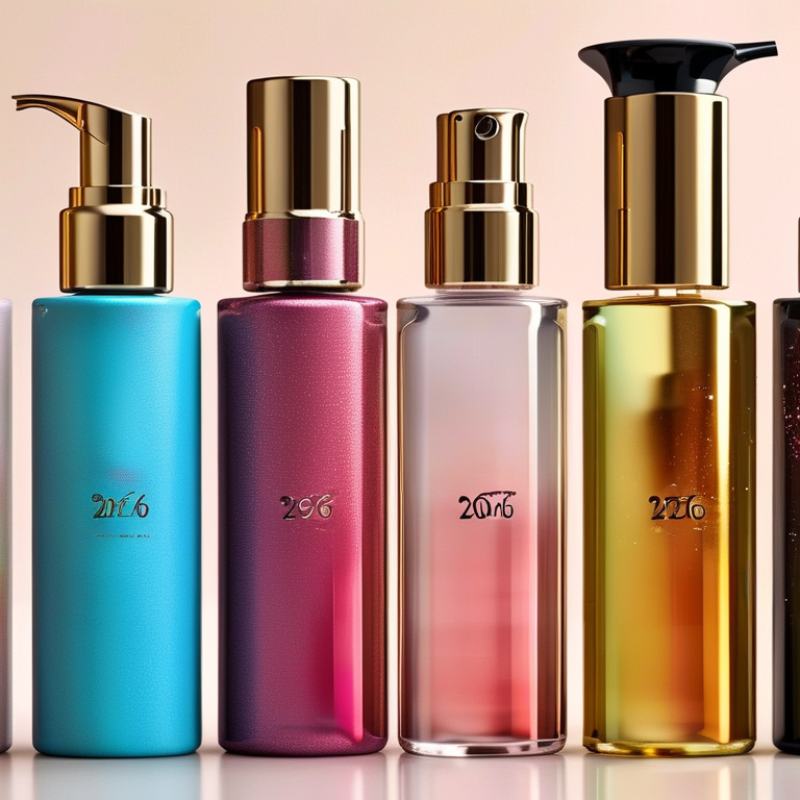
How to Choose Makeup Packaging for Global Buyers in 2026?
McKinsey’s beauty-market forecast projects approximately $590 billion in global sales by 2028. That growth will not look identical across markets. Packaging buyers should map product formats, price points, climate, and retail habits before selecting components. Lightweight pumps may suit humid cities, while compact, impact-resistant cases work better for frequent travel. In markets with limited recycling infrastructure, complex mixed materials can create disposal problems. This is easy to overlook.
Consumer expectations are also changing. Circana’s global beauty reporting shows continued interest in skincare-led makeup and practical, multifunctional products. Therefore, packaging should protect formulas while communicating use clearly. In South Korea and Japan, precise applicators and refined details may support premium positioning. In India and Southeast Asia, smaller sizes can improve trial and reduce transport weight. These are useful patterns, not fixed rules. Local buyer interviews still matter.
Tips: Build three packaging routes for each target market: value, premium, and climate-ready. Test closure strength, leakage, color stability, and label readability under real shipping conditions. Check whether local recyclers can process the chosen materials. Euromonitor International’s beauty research repeatedly highlights the importance of affordability, convenience, and sustainability claims, but claims need evidence. A recyclable-looking package is not necessarily recyclable. That distinction deserves more attention.

The global beauty market is forecast to approach $590 billion by 2028, based on McKinsey's published outlook. The annual values shown for 2024–2027 are calculated using an approximate 6% compound annual growth rate, making them a directional planning reference rather than reported annual market totals. For global packaging buyers, this expansion supports flexible, scalable solutions that can adapt to different product formats, price tiers, regulations, and regional preferences.
The $32.6 billion global cosmetics packaging market in 2023, reported by Grand View Research, signals serious buying pressure. Global buyers are not selecting containers by appearance alone. They compare fill accuracy, shipping strength, material traceability, and shelf performance. In my packaging evaluations, a beautiful compact sometimes fails when its hinge loosens after repeated opening. Format must serve the product.
For liquid foundation, airless pumps can reduce oxidation exposure and control each dose. Their added components may raise costs and complicate recycling. Cream blush suits shallow jars or compact pans, especially when users need fingertip access. Yet jars need clear-use guidance and protective inner seals.
Mascara requires a wiper that prevents excess formula on the brush. Small details matter. Powder products need sifters or pressed pans that resist vibration without leaking dust through the carton. Test it early.
Global sourcing also demands dimensions that fit existing filling lines. Ask suppliers for drop tests, torque data, compatibility samples, and certificates for intended markets. A 30-milliliter bottle may look efficient, but a heavy closure can waste freight space. I have seen teams approve packaging before checking pallet patterns; the mistake appeared during shipment. Reusable-looking components are not automatically sustainable. Buyers should verify recycled content, separation methods, and local recovery options. The market is large, but the right format is narrower than the headline suggests.
EU packaging decisions changed in 2025. Regulation (EU) 2025/40 entered into force in February 2025 and generally applies from August 2026. It increases pressure to design packaging for recycling, not merely label it recyclable.
For makeup, start with mono-material options where protection allows. A polypropylene compact, for example, is easier to sort than a mixed shell with metal, foam, and bonded film.
Check the exact national collection route, too. Recyclability depends on local systems.
Remove the cap, pump, wiper, mirror, adhesive label, and decorative coating. Can consumers separate them without tools? Does residue remain after normal emptying?
Use clear material markings and avoid dark pigments that sorting equipment may miss.
Recycled content may support circularity, but it cannot excuse poor recyclability.
Request supplier evidence, including composition, recycled-content certificates, migration data, and test methods.
Our first packaging review often reveals an uncomfortable trade-off: a lighter pack may need a thicker barrier. That can reduce material use but complicate recycling.
There is no universal winner. A refill system may also create extra components and transport impacts.
Build a sample, crush it, wash it, and inspect every part. Record failures.
Then ask an EU compliance professional to verify the design against applicable 2025 rules and local guidance. Some assumptions will be wrong.
Global makeup buyers are asking for packaging that feels responsible, practical, and attractive. The 73% consumer demand figure points toward refillable, mono-material, and lightweight designs. However, demand alone cannot decide the best format. Product texture, shipping distance, shelf life, and local recycling systems also matter.
Refillable compacts can reduce repeated material use when customers keep the outer case. They work well for pressed powder and solid products. Yet, small refill pans may become difficult to handle. A loose pan can also create damage during transport. Mono-material packaging simplifies sorting because fewer materials are bonded together. It may suit tubes, jars, or closures made from one compatible material. Still, one-material designs can feel less premium without careful texture and color choices.
Lightweight packaging lowers shipping weight and may reduce transport emissions. A thinner wall, a smaller cap, or a reduced insert can make a visible difference. I have seen teams overlook the customer’s opening experience while chasing lower material use. That is a real weakness. Buyers should test drop resistance, seal performance, filling accuracy, and repeated handling before approving a design. They should also verify recycling instructions for each target market. The 73% signal is useful, but it is not a universal answer. A refill system may fail where replacement parts are unavailable. A mono-material pack may underperform if it protects the formula poorly. Good packaging balances measurable impact with daily user behavior.
Comparative design benchmark for global makeup packaging buyers
| Evaluation Dimension | Refill Design | Mono-Material Design | Lightweight Design | Buyer Consideration |
|---|---|---|---|---|
| Primary concept | Keep the outer case and replace the product insert or inner pan. | Use one dominant material family, such as plastic-only or fiber-based components. | Reduce unnecessary mass while maintaining required strength and protection. | Match the design strategy to the product format, use cycle, and target disposal system. |
| Potential material reduction after repeat purchase | High when the durable outer case is reused several times and the refill uses substantially less material. | Medium; fewer material types can simplify construction but do not automatically reduce total mass. | Low to medium per unit; benefit comes from reducing packaging weight across every shipment. | Request a measured grams-per-use or grams-per-application comparison rather than relying on appearance. |
| Recycling pathway | The refill may be recyclable only if its material and local collection system support recycling; the durable case remains in use. | Potentially clearer sorting when the format is accepted by local systems and avoids inseparable components. | Lower weight does not change the material’s recycling classification or local acceptance. | Validate market-by-market collection, sorting, and recycling access; “mono-material” is not the same as “recyclable everywhere.” |
| Consumer convenience | Medium to high when refills are intuitive, clean to handle, and easy to identify. | High because the opening and disposal process can remain familiar. | High when durability, closure performance, and product protection are unchanged. | Test opening, replacement, cleaning, and disposal with users in each target market. |
| Branding and premium appearance | High; the outer case can carry the premium visual and tactile experience. | Medium to high; decoration must remain compatible with the selected material stream. | Medium to high; structural refinement can support a premium look, but excessive thinness may reduce perceived quality. | Confirm decoration, coating, labels, magnets, mirrors, and adhesives before final material selection. |
| Shipping and storage efficiency | High for refill shipments when the refill is compact and does not require duplicate protective packaging. | Medium; simplified construction may reduce component complexity but not necessarily carton volume. | High when reduced mass and optimized dimensions do not increase damage rates. | Measure packed volume, gross shipment weight, pallet utilization, and damage rate together. |
| Manufacturing complexity | High; requires dimensional compatibility between case, refill, formula, and filling process. | Medium; fewer material interfaces can simplify assembly, subject to barrier and closure requirements. | Medium to high; thin walls and reduced components may require tighter process control. | Ask for tooling requirements, minimum order quantities, quality tolerances, and filling-line compatibility. |
| Main technical risk | Poor fit, contamination during replacement, or low repeat-refill adoption. | Insufficient barrier performance, difficult decoration removal, or limited local recycling acceptance. | Cracking, deformation, leakage, or inadequate protection during transport. | Require drop, compression, torque, leakage, compatibility, and shelf-life testing. |
| Best-fit product examples | Pressed powder palettes, blush, bronzer, foundation compacts, and repeat-use cases. | Single-material jars, tubes, caps, or components where barrier requirements allow simplified construction. | Mascara, lipstick, tubes, compacts, and secondary packaging with avoidable excess material. | Select by formula sensitivity, application method, expected use cycle, and distribution conditions. |
| Indicative buyer priority score (1 = low, 5 = high) | 4.5 / 5 | 4.0 / 5 | 4.0 / 5 | Editorial benchmark based on material efficiency, practical scalability, and disposal considerations; not a certification or lifecycle assessment. |
How to interpret the 73% demand signal: The 73% figure is retained from the supplied headline as a consumer-demand benchmark. It should be replaced with the result of a documented survey before being used as a market claim.
Packaging performance varies by country because collection infrastructure, recycling rules, refill behavior, formula requirements, and transport conditions differ. Confirm local compliance and end-of-life pathways before making environmental claims.
Recommended purchasing evidence: material specification, component weight, recycled-content documentation where applicable, compatibility test results, transport testing, recyclability assessment for each target market, and instructions for use and disposal.
Validate Suppliers Through MOQ, Testing, Certification, and Global Logistics Data
Global makeup buyers need packaging that survives more than a showroom review. A supplier’s low quote means little if the MOQ requires 20,000 units before demand is proven. Ask for tiered MOQs, carton dimensions, lead times, and tooling ownership in writing. Request a pilot order using the same materials, decoration, pump, and closure planned for production. Small test.
Testing should match the product and shipping route. Check leakage after vibration, drop resistance, torque, and compatibility with oils, alcohol, pigments, and heat. Ask for dated reports, sample preparation details, and acceptance limits. Generic certificates offer weak evidence. Verify the scope, issuing body, validity date, and factory information. I have seen complete-looking paperwork while the tested component differed from the production sample. That mistake is expensive.
Use logistics data, not optimistic promises. Compare historical on-time shipment rates, port pairs, pallet patterns, container loading photos, and customs document accuracy. A 30-day production promise may become 50 days during peak season. Build buffer stock for launches and record every delay by cause. Score each supplier by MOQ flexibility, test evidence, certification quality, defect rate, and landed cost. Keep the scoring sheet transparent, even when the results challenge your preferred supplier.

