How to Choose the Best Flotation Equipment for Your Needs?
Choosing the best Flotation Equipment for your needs can be a daunting task. According to industry expert Dr. Emily Johnson, "Selecting the right flotation technology is crucial for maximizing efficiency." This highlights the importance of understanding your specific requirements before making a decision.
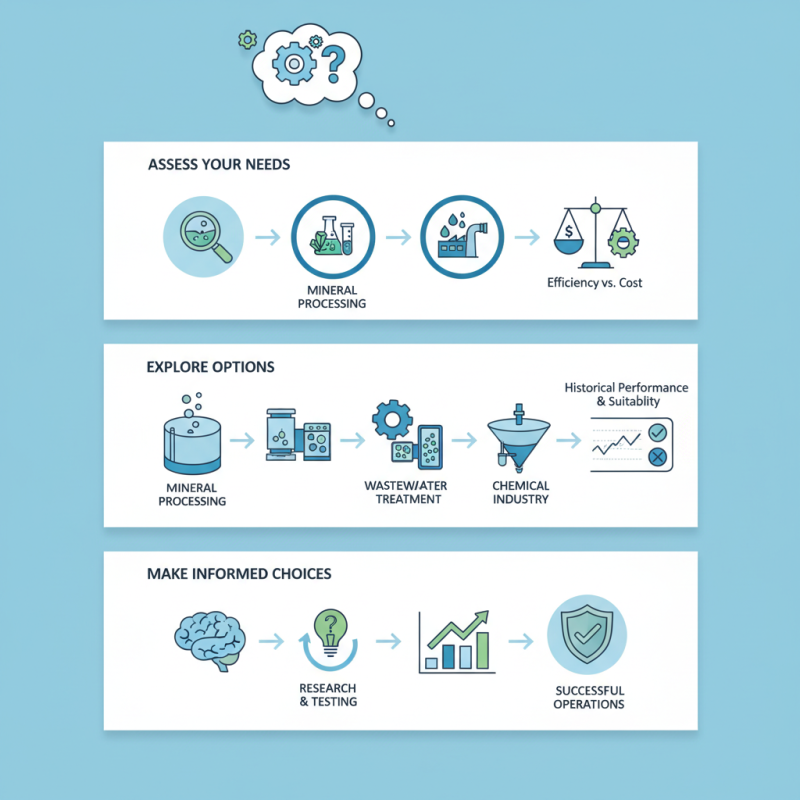
The flotation equipment industry has a diverse range of options. Each type varies in design, functionality, and application. For instance, some equipment focuses on mineral processing, while others cater to wastewater treatment. Understanding the specific needs of your operations is essential. It is not enough to rely solely on vendor claims or popular choices; historical performance and suitability for your operations must be considered.
Moreover, it's vital to reflect on the limitations and potential drawbacks of different flotation equipment. Not all equipment will perform optimally in each scenario. Past experiences with underperforming systems illustrate the importance of thorough research and practical testing. Balancing efficiency with cost-effectiveness requires careful analysis and consideration of several variables. In the rapidly evolving flotation equipment landscape, making informed choices will set the foundation for successful operations.
Understanding the Basics of Flotation Equipment Technology
Flotation equipment is crucial in many industries. Understanding its technology can help you select the right type. Flotation separates materials based on differences in density. Air bubbles or other flotation agents lift lighter particles while heavier ones sink.
The process starts with the slurry mixture. This is a mixture of solids and liquids, often containing minerals or waste. The flotation tank is where the separation occurs. Here, the introduction of air creates bubbles, capturing lighter materials. This method is efficient but can be complex. The choice of equipment should match your specific requirements.
Different types of flotation systems exist. Some are continuous, while others are batch systems. Each has its benefits and drawbacks. Consider the scale of your operations. Larger systems may handle more volume but require more maintenance. Small-scale systems offer flexibility but might lack efficiency. Always evaluate your needs and examine the nuances in technology.
Flotation Equipment Types and Their Efficiencies
This chart represents the efficiency percentage of various flotation equipment technologies. Each type of flotation method has unique applications and performance characteristics, which are crucial for selecting the right equipment for specific needs.
Types of Flotation Equipment and Their Applications
Flotation equipment comes in various types, each serving different applications. Mechanical flotation cells are among the most common. These cells use impellers to create turbulence. This turbulence helps separate materials based on their density and hydrophobic properties. They are widely used in mineral processing. However, they may not be efficient for small-scale operations.
Column flotation is another option. It utilizes a tall cylindrical flotation cell. Air bubbles rise through a slurry, collecting particles as they ascend. This method is effective for fine particles. However, it requires careful control of operational parameters. Overlooking these details can lead to suboptimal results.
Lastly, flotation columns and reactors provide innovative solutions. They combine multiple processes, enhancing efficiency. They are increasingly popular in wastewater treatment. Despite their advantages, these systems can be complex. Operators must be well-trained to ensure effectiveness. Choosing the right equipment requires understanding these nuances. A one-size-fits-all approach may not work. Consider your specific needs carefully.
Key Factors to Consider When Choosing Flotation Equipment
When selecting flotation equipment, understanding key factors is essential. The efficiency and performance of your flotation system significantly influence your operational costs. According to a recent report by industry experts, energy costs can account for up to 30% of total processing expenses in mineral recovery operations. Therefore, choosing equipment that optimizes energy consumption is critical.
Another vital aspect is the material compatibility of the flotation equipment. Different materials respond differently in flotation processes. For instance, sulfide minerals require equipment that can handle higher aggressiveness in reagents. Studies show that improper material selection can lead to a 25% decrease in recovery rates. Additionally, flotation kinetics should be considered. A well-designed flotation cell must ensure the right particle size range and distribute reagents evenly.
Not all flotation systems perform equally across various conditions. Testing and scalability are often overlooked. Small-scale tests may not yield the same results as full-scale operations. Reflecting on this may help prevent costly mistakes later. Balancing these factors is crucial in making an informed decision about the right flotation equipment for your needs.
Evaluating Performance and Efficiency of Flotation Systems
Evaluating the performance and efficiency of flotation systems is crucial for various industries such as mining and wastewater treatment. Efficiency often hinges on the selection of the right equipment. Many reports, including those from the International Journal of Mineral Processing, indicate that optimal aeration rates can significantly enhance recovery rates. An aeration rate between 0.5 to 2.0 cubic meters per ton has shown to maximize performance in many cases.
Understanding the principles behind flotation is vital. The process relies on differences in surface chemistry between minerals. Effective flotation systems must be able to adjust to varying types of ore. A study by the Society for Mining, Metallurgy & Exploration highlights that the choice of collector chemicals can impact recovery by up to 30%. Variability in ore composition can lead to differences in flotation efficiency, demanding ongoing adjustment and calibration for best results.
One challenge in flotation is achieving consistent performance. Many operators face difficulties maintaining the optimal froth height and bubble size. Industry data suggests that fluctuations in these parameters can decrease efficiency by as much as 20%. Continuous monitoring and a reliable feedback loop are essential for refining processes. Adopting a systematic approach can help identify patterns in inefficiencies, allowing operators to make informed adjustments over time.
How to Choose the Best Flotation Equipment for Your Needs? - Evaluating Performance and Efficiency of Flotation Systems
| Equipment Type | Separation Efficiency (%) | Power Consumption (kWh/t) | Maintenance Frequency (Months) | Cost (USD) |
| Mechanical Flotation Cell | 85 | 20 | 6 | 25,000 |
| Column Flotation Cell | 90 | 15 | 12 | 30,000 |
| Jameson Cell | 92 | 10 | 9 | 35,000 |
| Reflux Flotation Cell | 88 | 18 | 8 | 40,000 |
| Dissolved Air Flotation | 80 | 25 | 10 | 28,000 |
Maintenance and Operational Considerations for Flotation Equipment
Maintaining flotation equipment is crucial for optimal performance. A well-maintained flotator can improve recovery rates by up to 15%, according to industry studies. Regular inspection of wear parts is essential. This includes examining impellers, stators, and flotation cells for wear and tear. Scheduled maintenance can prevent performance issues and enhance longevity.
Operational considerations impact recovery and energy efficiency. It's important to monitor the air flow rates and the chemical reagents used during flotation. Small adjustments in these parameters can lead to significant changes in separation efficiency. For instance, a 5% increase in air flow may yield a 10% boost in mineral recovery. However, experimenting with different setups can sometimes lead to less-than-ideal results. It's essential to find a balance based on specific operational conditions.
Training operators on the equipment's controls is vital yet often overlooked. Data shows that untrained personnel can lead to a 20% decrease in operational efficiency. Communication and feedback loops should be established. Operators must share observations about equipment performance. This can lead to insightful adjustments over time, while also fostering a culture of continuous improvement within teams.