






In today's competitive manufacturing landscape, businesses seek precision and efficiency. A Cnc Milling Center stands out as an essential tool for achieving these goals. Renowned industry expert Mark Johnson states, "A CNC Milling Center revolutionizes the way we approach complex manufacturing tasks." His insights emphasize the center's versatility and effectiveness.
Integrating a CNC Milling Center can lead to significant advantages. The technology allows for intricate designs and high-speed production. It transforms raw materials into precise components with minimal human intervention. Companies leveraging this technology witness improved accuracy and reduced waste. This evolution makes a tangible impact on operational efficiency.
However, the choice is not without challenges. Investing in a CNC Milling Center requires expertise and a clear understanding of the machine's capabilities. Companies must be prepared to train their personnel and adapt workflows. While the potential rewards are substantial, proper implementation is crucial for success. The journey begins with informed choices and commitment to continuous improvement.
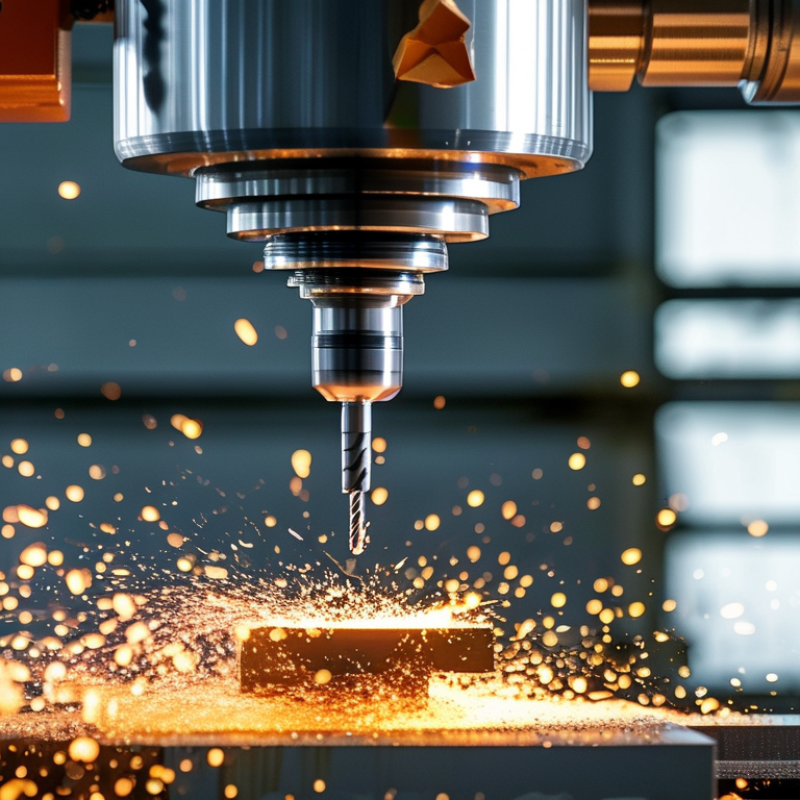
CNC milling centers offer numerous advantages in modern manufacturing. One notable benefit is precision. These machines can produce parts with tight tolerances. This level of accuracy is essential in sectors like aerospace and medical devices. The ability to replicate complex geometries consistently remains unmatched by manual processes.
Another significant advantage is efficiency. CNC milling centers operate continuously, reducing downtime. They can run unmanned during non-working hours. This maximizes output and minimizes production costs. However, transitioning to CNC can seem daunting for some manufacturers. Training staff and integrating new systems requires time and investment.
Flexibility is also a key strength. CNC milling can handle various materials, from metals to plastics. This adaptability allows manufacturers to respond to changing market demands quickly. Yet, this flexibility may lead to overreliance on technology. It's crucial to maintain skilled operators who can troubleshoot issues effectively. Balancing automation with human oversight is essential for long-term success.

CNC milling centers offer various types and functions to meet diverse manufacturing needs. Vertical CNC milling centers are common for their straightforward design. These machines excel at creating intricate parts. They're used in industries like aerospace and automotive. Horizontal CNC milling centers allow for larger workpieces. They often include multi-axis capabilities, which enable high-precision manufacturing of complex geometries.
These milling centers incorporate various technologies. For instance, 3D CNC milling centers can produce complex shapes with ease. Industries require precision and efficiency, making these machines essential.
**Tip:** Regular maintenance improves machine longevity. Scheduled inspections catch potential issues early, preventing costly downtime.
Another type, twin-spindle CNC milling centers, can perform multiple operations simultaneously. This feature multitasks for enhanced productivity. However, complexity can sometimes lead to errors, so careful programming is required.
**Tip:** Proper training is vital for operators. Understanding software and machine settings enhances accuracy. Mistakes can lead to waste, impacting profitability.
Choosing the right CNC milling center is crucial. With the right type, businesses can significantly improve efficiency and product quality. Prioritize your needs to find the best fit.
| Type of CNC Milling Center | Applications | Materials Worked | Key Features |
|---|---|---|---|
| Vertical CNC Milling Center | Precision machining, small to medium-sized parts | Aluminum, plastics, and some steels | Versatile, easy to set up, excellent visibility |
| Horizontal CNC Milling Center | High-volume production, complex part geometries | Steel, cast iron, and titanium | Enhanced chip control, rotary tables for multi-sided machining |
| 5-Axis CNC Milling Center | Complex components in aerospace and medical sectors | Metals, composites, high-performance plastics | Ability to machine parts from multiple angles, reduced setup time |
| CNC Gantry Milling Center | Large scale machining, heavy equipment | Plastics, metals, composite materials | Sturdy design for heavy-duty operations, extensive work area |
| CNC Laser Milling Center | Engraving and intricate designs | Metals, wood, ceramics, and acrylics | High precision, minimal material waste, fast cutting speeds |
CNC milling offers significant advantages over traditional machining methods, especially in precision and efficiency. According to a 2022 report by the Modern Machine Shop, CNC milling machinery can achieve tolerances of ±0.001 inches, while traditional methods often struggle to go below ±0.005 inches. This precision allows manufacturers to create intricate designs that are crucial in industries like aerospace and automotive.
Additionally, CNC milling centers operate with speed. A study released by the American Society of Mechanical Engineers shows that CNC machines can increase production rates by up to 50% compared to manual machining. This speed also enables quicker turnaround times, which is vital for businesses facing tight deadlines. However, initial setup and programming for CNC milling can take longer, requiring skilled operators and software knowledge.
Despite these benefits, relying solely on CNC milling may not be suitable for all projects. Traditional methods can still shine for simpler parts or one-off projects where setup time and cost efficiency are paramount. As you explore options for manufacturing, consider both methods' strengths and weaknesses carefully. Choosing the right approach hinges on the specific needs of your projects.
When selecting a CNC milling center, various factors demand attention. The machine's size and capabilities must align with your project requirements. A smaller center may suffice for basic tasks, while more complex designs could require larger or multi-axis capabilities. Also, consider the type of materials you'll be using. Different CNC mills handle materials differently, which can impact the final product's quality.
Another important aspect is the level of technical support available. A reliable milling center should offer assistance and guidance, especially if challenges arise. Communication with the manufacturer is essential. If they cannot provide timely help, it may lead to costly delays in production.
Moreover, assess the precision and tolerances of the CNC center. While high precision is often desirable, it may not always be necessary for every project. Finding a balance between cost and accuracy can be tricky. Machines with high precision come with a higher price tag. Remember that investing wisely now can save costs later, but beware of over-engineering for simple tasks.
As CNC milling technology evolves, manufacturers must stay informed about future trends. Automation is one major trend. Automated CNC milling centers can significantly enhance productivity. They reduce human error and free up skilled workers for complex tasks. This shift allows businesses to maximize efficiency.
Another significant development is the rise of artificial intelligence in CNC milling. AI can optimize machining processes in real-time. This not only saves time but also improves the quality of the finished product. More precise cuts and better material usage can lead to cost savings over time.
**Tip:** Invest in training your team on the latest CNC technologies. Understanding these advancements ensures your team can use them effectively.
Lastly, sustainability is becoming essential in manufacturing. CNC milling processes are evolving to become more eco-friendly. Machines are designed to minimize waste and energy consumption. This aligns with global efforts to reduce environmental impact.
**Tip:** Evaluate the materials and techniques your shop uses. Sustainable practices can boost your brand’s reputation and appeal to eco-conscious customers.

