






China’s die-cutting industry serves packaging, labels, paper products, electronics, and converting businesses worldwide. The market is becoming more demanding. Buyers now expect accurate cutting, stable production, quick service, and documented quality control.
Smithers’ report, The Future of Global Packaging to 2028, forecasts continued global packaging growth, supported by e-commerce, food delivery, and premium product presentation. This growth creates opportunities for die cutter manufacturers, but it also raises purchasing risks. A machine may look impressive in a showroom. Its real performance appears during long production runs, difficult materials, and tight delivery schedules.
This guide examines leading Chinese die cutter manufacturers through practical and technical criteria. These include cutting accuracy, machine structure, automation, tooling support, energy consumption, spare-part availability, and export experience. ISO 9001 certification can indicate a quality-management system, but certification alone proves little about daily machine performance. Buyers should request sample tests, production videos, reference customers, and clear acceptance standards.
The Global Industry Analysts report on the die-cutting machine market also highlights automation and digital control as important development directions. Yet market reports often combine different machine categories. Their figures should guide research, not replace supplier verification. That distinction matters.
A reliable manufacturer should explain tolerances, material limits, maintenance intervals, and expected output honestly. It should also acknowledge weaknesses. No factory is perfect. This article compares China’s notable suppliers with that realistic standard, helping buyers identify equipment that fits their materials, volumes, and long-term operating plans.
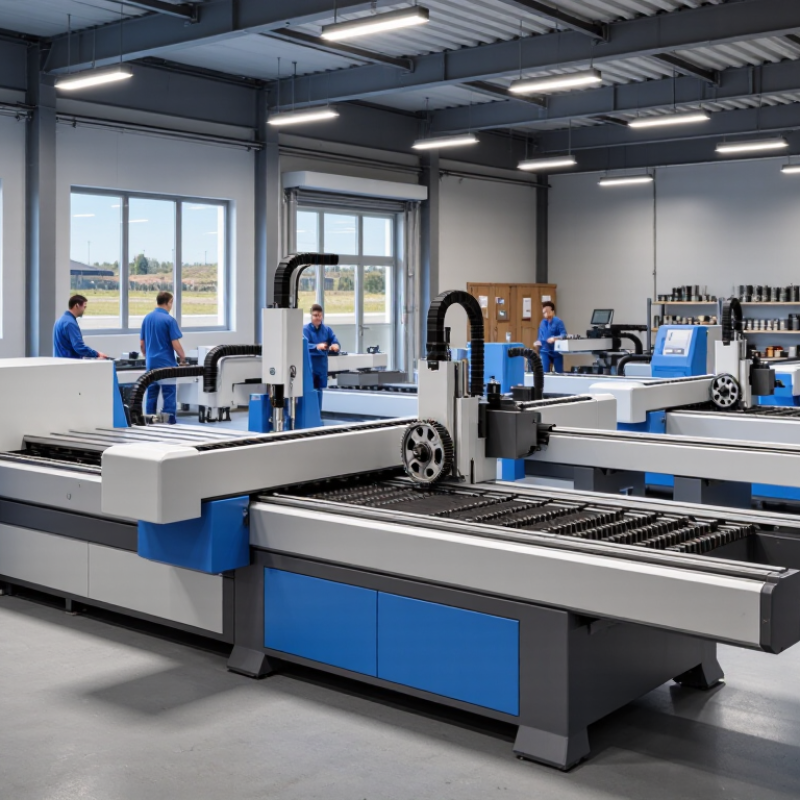
A die cutter is a machine that shapes sheet material with a custom cutting tool. The tool may contain sharp steel rules, creasing rules, or perforating lines. It processes paper, cardboard, labels, foam, and selected flexible materials. Pressure matters.
In a flatbed die cutter, an operator places the material on a feed table. The machine moves it beneath a die, then applies controlled pressure. The blades cut the outline, while other rules create folds or tear lines. A stripping unit can remove unwanted waste from the finished sheet. Rotary models use a cylindrical die and support faster continuous production. Accurate registration is essential when printing and cutting must align.
From practical production experience, clean edges depend on more than cutting force. Die height, material thickness, feed speed, and tool sharpness all affect results. Excessive pressure can crush cardboard or damage the cutting plate. Insufficient pressure leaves small bridges and incomplete corners. Waste reveals problems. A reliable manufacturer should provide sample testing, measured tolerances, maintenance guidance, and operator training. Safety guards and emergency controls also require careful inspection. I would not judge a machine by speed alone. Setup time, repeatability, spare-part access, and after-sales response often matter more. Even experienced teams can miss a registration shift during long runs, so regular checks remain necessary.
| Evaluation Dimension | Key Information | Typical Industry Data | Why It Matters When Selecting a Manufacturer |
|---|---|---|---|
| Definition | A die cutter is a machine that uses a shaped die, blade, or tooling set to cut, crease, perforate, emboss, or kiss-cut sheet or web materials. | Common materials include paperboard, corrugated board, labels, films, foams, rubber, leather, textiles, and thin plastics. | A manufacturer should offer a machine configuration suited to the material, thickness, tolerances, and production volume. |
| Basic Operating Principle | The material is positioned between the die and a counterplate or anvil. Pressure is applied so the cutting edges penetrate the material along the required shape. | Depending on the machine, cutting force may be generated by a platen, rotary cylinder, hydraulic system, or servo-driven mechanism. | The drive system affects speed, repeatability, energy use, noise, and maintenance requirements. |
| Main Machine Types | Flatbed, rotary, laser, and digital die-cutting systems are the main categories used in industrial production. | Flatbed machines suit precise sheet processing; rotary machines support continuous web production; laser and digital systems reduce or eliminate traditional tooling. | The correct machine type depends on order volume, shape complexity, changeover frequency, and required tooling cost. |
| Flatbed Die Cutting | A flat cutting forme moves vertically against a flat impression cylinder or platen. | Often used for cartons, packaging inserts, gaskets, labels, and thicker sheet materials. | It provides strong cutting pressure and accurate registration, but may have slower cycle rates than rotary equipment. |
| Rotary Die Cutting | A cylindrical die rotates continuously against an anvil cylinder while material passes through the nip. | Commonly used for labels, tape, flexible packaging, medical disposables, and high-volume web production. | It supports continuous production and high throughput, but the tooling and setup must be matched carefully to the substrate. |
| Laser Die Cutting | A focused laser beam removes or separates material without physical cutting dies. | Useful for prototypes, short runs, intricate patterns, variable data, and materials compatible with laser processing. | It reduces tooling lead time, although heat-affected edges, fumes, material compatibility, and operating cost must be assessed. |
| Cutting Operations | Machines may perform through-cutting, kiss-cutting, creasing, perforating, slitting, scoring, and embossing. | Kiss-cutting leaves the liner intact; creasing forms fold lines; perforation creates controlled tear lines. | A multifunction machine can reduce secondary processing, but each operation requires suitable tooling and pressure control. |
| Typical Material Thickness | The workable range varies widely by machine design, tooling, material density, and required cut quality. | Label films and foams may be processed at sub-millimeter thicknesses, while packaging board and specialty sheets can be several millimeters thick. | Manufacturers should confirm material trials rather than relying only on a nominal maximum thickness. |
| Production Format | Die cutters are available for individual sheets, stacks, rolls, and continuous web materials. | Sheet-fed systems are widely used for folding cartons; roll-to-roll systems are common for labels, tapes, films, and flexible materials. | Matching the feed format with the existing printing or converting line can improve productivity and reduce handling. |
| Accuracy and Registration | Cutting accuracy depends on machine rigidity, servo control, optical or mechanical registration, tooling quality, and material stability. | Printed packaging and labels require tighter registration than many non-printed protective pads or gaskets. | Ask for measured tolerance data on a sample matching the intended material and production speed. |
| Automation Features | Useful functions include automatic feeding, sheet alignment, web tension control, waste stripping, inspection, stacking, and recipe storage. | Automation can reduce manual adjustment, setup time, material waste, and operator variability. | The best configuration balances automation benefits with product mix, staffing, maintenance capability, and budget. |
| Tooling Requirements | Traditional systems use engraved or rule dies, rotary dies, perforation tools, creasing rules, and stripping forms. | Tooling life depends on material abrasiveness, cutting pressure, operating speed, maintenance, and storage conditions. | Reliable tooling design and replacement support are essential for consistent quality and predictable production costs. |
| Quality and Safety Standards | A professional machine should include guarding, emergency stops, interlocks, electrical protection, clear operating instructions, and documented testing. | Applicable requirements may include machinery safety, electrical safety, electromagnetic compatibility, and local workplace regulations. | Certification documents and risk-control features help buyers evaluate compliance and reduce operational hazards. |
| Manufacturer Evaluation Criteria | Important criteria include engineering capability, application testing, machining quality, quality control, customization, delivery reliability, spare parts, and technical service. | A serious supplier should be able to provide drawings, machine specifications, sample testing, acceptance criteria, manuals, and after-sales procedures. | Evaluating verifiable capabilities is more reliable than choosing solely by advertised speed or purchase price. |
| Best Application Match | Packaging, labels, gaskets, insulation parts, medical components, electronics materials, automotive interiors, and promotional products all use die-cut components. | Product geometry, material elasticity, adhesive behavior, surface finish, and cleanliness requirements differ by application. | A manufacturer with relevant application experience can improve first-pass yield and reduce trial-and-error during commissioning. |
| Total Cost of Ownership | Total cost includes machine price, tooling, installation, training, electricity, consumables, preventive maintenance, downtime, labor, and replacement parts. | A lower purchase price may result in higher costs if setup takes longer, waste is greater, or technical support is limited. | Compare expected output, yield, service response, and operating costs over the machine's planned service period. |
