






Choosing the 2026 Best Delta Frequency Drive requires more than comparing prices, power ratings, or product photographs. Global buyers need reliable performance across pumps, fans, conveyors, compressors, and demanding factory lines. A Delta Frequency Drive can influence energy use, motor protection, process stability, installation time, and long-term maintenance costs.
The International Energy Agency reports that electric motor systems consume roughly half of global electricity. Its Energy Efficiency 2024 analysis also highlights motor efficiency and variable-speed control as important opportunities for reducing industrial energy demand. The U.S. Department of Energy notes that variable frequency drives can deliver substantial savings in variable-torque applications, especially where flow is commonly controlled by throttling. These figures provide direction, not a guaranteed result. Actual savings depend on load patterns, motor condition, control settings, and commissioning quality.
This guide examines Delta drives through practical buyer criteria: voltage compatibility, overload capacity, braking options, communication protocols, enclosure protection, harmonic performance, and regional technical support. IEC 61800 standards offer a useful reference for drive safety and performance evaluation. Delta Electronics’ public product documentation and corporate reports also help clarify application ranges, certifications, and service expectations. However, no single model is best for every country or machine. A drive selected for a quiet HVAC pump may fail commercially on a dusty conveyor line if cooling, braking, or after-sales support is overlooked. The comparison therefore remains imperfect, but deliberately useful. It focuses on evidence, field realities, and the details that often decide whether a global purchase performs well after installation.
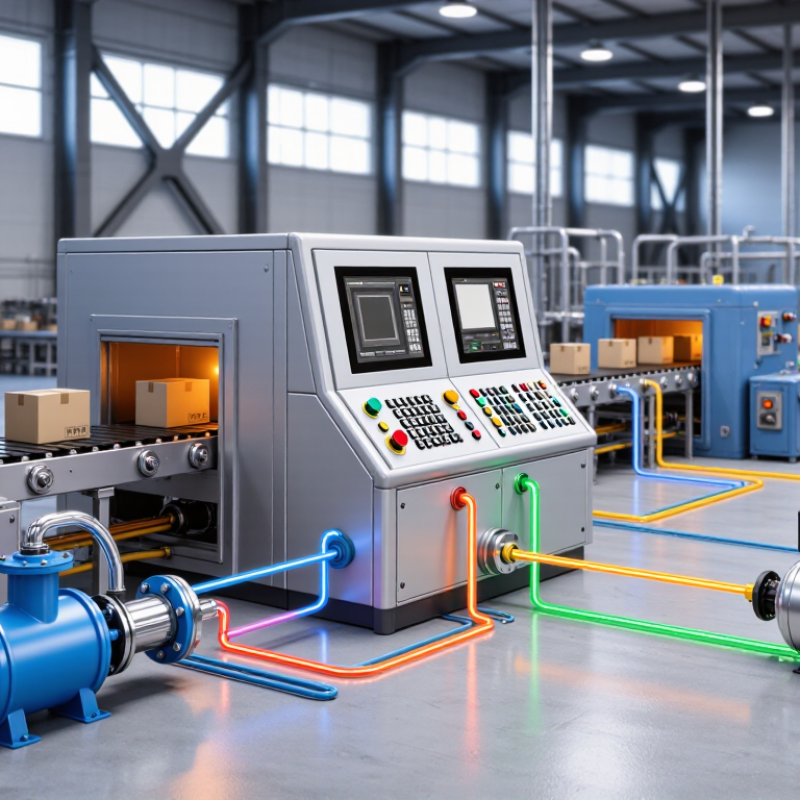
A frequency drive controls motor speed by adjusting electrical frequency and voltage. It converts fixed incoming power into controlled output power. This simple function supports smoother starts, steadier production, and lower mechanical stress. In industrial automation, the drive links motors with sensors, controllers, and operator interfaces. It can respond to pressure, flow, temperature, or speed feedback. That connection makes a basic motor part of a responsive process.
Field commissioning often reveals the difference between a suitable drive and an oversized purchase. A pump may need stable low-speed control, while a conveyor may require stronger starting torque. Buyers should check motor ratings, overload capacity, enclosure protection, cooling method, and communication protocols. Do not trust a catalog number alone. Cable length, ambient heat, dust, and voltage variation can change performance. Small details matter.
Configuration also affects reliability. Acceleration ramps can reduce product movement and belt shock. Current limits can protect equipment during jams, but overly cautious settings may interrupt normal operation. This balance is not always obvious. I have seen technically correct installations perform poorly because tuning was rushed. That is a useful warning. Global buyers should request clear manuals, test records, spare-part guidance, and responsive technical support. A drive should fit the whole automation system, not only the motor nameplate.

Delta Frequency Drive Basics and Its Role in Industrial Automation
A frequency drive controls an AC motor by varying the output frequency. The chart shows the theoretical synchronous speed of a four-pole motor at common operating frequencies, calculated using the formula: Speed = 120 × Frequency ÷ Number of Poles. Actual motor speed is slightly lower because of slip under load.
For global buyers in 2026, selecting a delta frequency drive requires more than comparing rated power and purchase price. Start with motor compatibility, voltage class, overload capacity, and the duty cycle at the actual site. A dusty pump room needs a different enclosure strategy than a clean packaging line. Check ambient temperature, altitude, humidity, vibration, and available cooling. Small details matter. Request test data for low-speed torque, regenerative braking, harmonic behavior, and fault recovery. These figures reveal how the drive may perform beyond a showroom demonstration. Still, published data can be incomplete.
Global projects also demand input flexibility and documented compliance with the destination market’s electrical requirements. Confirm frequency range, phase configuration, EMC performance, safety functions, and certification documents before issuing a purchase order. A drive intended for a 400-volt system may not suit a 480-volt installation without careful engineering. Ask whether manuals, keypad menus, and remote support are available in the installers’ working languages. Support response time matters when a conveyor stops at midnight. Insist on spare-parts availability, firmware control, and clear warranty boundaries. Be skeptical.
For procurement teams, lifecycle cost deserves a practical spreadsheet. Include energy use, filter replacement, panel modifications, commissioning labor, training, and disposal requirements. Compare realistic operating hours, not only the nameplate efficiency figure. A lower purchase price can become expensive after repeated nuisance trips. Pilot testing with the intended motor and load is valuable, especially for fans, hoists, mixers, and long cable runs. Record acceleration time, current peaks, temperature, and alarm history during the trial. One weakness remains: buyers sometimes select from datasheets alone. That shortcut deserves reconsideration.
| Selection Dimension | Global Buyer Benchmark for 2026 | Why It Matters | Recommended Verification |
|---|---|---|---|
| Input voltage compatibility | Select a rated class matching the site supply: 200–240 V, 380–480 V, or 500–690 V AC; confirm single-phase or three-phase input. | Voltage mismatch can cause nuisance trips, reduced output power, or equipment damage. | Compare the nameplate voltage, allowable tolerance, phase arrangement, frequency, and short-circuit rating with the installation power system. |
| Motor and application rating | Size by motor current and load duty, not motor kW alone. Use normal-duty sizing for variable-torque loads and heavy-duty sizing for constant-torque loads. | Two motors with the same power rating may require different drive current capacity because of efficiency, power factor, altitude, and duty cycle. | Check motor full-load current, starting torque, load inertia, acceleration time, braking requirement, and operating speed range. |
| Overload capacity | A common benchmark is approximately 110% of rated current for 60 seconds in normal-duty operation and approximately 150% for 60 seconds in heavy-duty operation; actual values vary by model. | Adequate overload capacity supports conveyors, compressors, mixers, hoists, and other demanding loads. | Use the manufacturer’s published overload curve at the intended carrier frequency, ambient temperature, and altitude. |
| Control performance | For general machinery, sensorless vector control is typically sufficient. Closed-loop vector control is preferred where precise torque, speed regulation, or low-speed performance is required. | Control mode affects starting torque, speed accuracy, and stable operation under changing loads. | Review speed regulation, torque response, encoder compatibility, autotuning functions, and motor-cable limitations. |
| Frequency and speed range | Standard systems support 50/60 Hz supplies and adjustable output frequency. The usable motor speed range depends on motor cooling, torque profile, and control method. | Operating a standard motor continuously below its base speed may reduce self-cooling and require derating or forced ventilation. | Confirm minimum continuous speed, maximum frequency, constant-power range, and motor thermal protection method. |
| Energy-saving capability | For fans and pumps, variable-speed control can reduce throttling losses; energy results depend on the load profile, operating hours, and system curve. | The largest savings generally occur when flow or pressure can be reduced through speed control rather than mechanical throttling. | Estimate annual energy use from measured load points, operating hours, electricity tariffs, and expected speed reduction. |
| Input harmonics and power quality | Evaluate the drive’s input current distortion and consider line reactors, DC chokes, passive filters, or active front-end equipment where required. | Harmonics can affect transformers, capacitors, generators, protection devices, and sensitive control equipment. | Check compliance with the project’s power-quality limits and applicable requirements such as IEC 61000-3-12 or IEEE 519. |
| Environmental protection | Use an enclosure rating appropriate to the site, commonly IP20 for cabinet installation and higher IP ratings for exposed or dusty environments. Typical operating limits are around −10 to 50 °C before derating, depending on the design. | Dust, moisture, corrosive gas, vibration, altitude, and heat can shorten service life or reduce available output current. | Verify IP or NEMA rating, humidity limits, vibration rating, chemical exposure, altitude derating, cooling clearance, and cabinet ventilation. |
| Motor insulation and cable distance | Use inverter-duty motor insulation where possible. Long motor cables may require an output reactor, dV/dt filter, or sine-wave filter. | Fast switching edges can increase motor-terminal voltage stress, bearing currents, electromagnetic interference, and reflected-wave effects. | Check maximum cable length, switching frequency, grounding method, shield termination, and filter requirements in the installation manual. |
| Braking and regenerative energy | For frequent deceleration or overhauling loads, evaluate a braking resistor, braking unit, common DC bus, or regenerative front end. | Without a suitable energy path, DC-bus overvoltage may cause trips during stopping or load descent. | Calculate regenerated energy, braking power, duty cycle, resistor thermal capacity, and required stopping time. |
| Communication and integration | Prioritize the protocol used by the automation system, such as Modbus RTU, Ethernet-based industrial protocols, CANopen, or a fieldbus option. | Native compatibility reduces gateways, wiring, commissioning time, and potential communication faults. | Confirm supported protocols, data objects, baud rates, topology, cybersecurity controls, and PLC integration files. |
| Safety functions | A built-in Safe Torque Off function is a common baseline for machinery safety; additional functions may be required for speed or motion control. | Safety functions can reduce external components and help meet the machine risk assessment. | Verify the safety integrity level or performance level, dual-channel wiring, diagnostic coverage, and certification for the complete system. |
| International compliance | Confirm applicable market requirements, including CE, UKCA, UL/CSA, EMC, RoHS, and machine or electrical-equipment regulations. | Regulatory compatibility affects import clearance, installation approval, insurance, and customer acceptance. | Request current declarations, certificates, EMC category, installation conditions, and regional documentation before purchase. |
| Serviceability and lifecycle support | Prefer documented spare-part availability, parameter backup, removable control terminals, fault-history access, and regional technical support. | Downtime cost may exceed the initial purchase price, especially in continuous-process applications. | Compare warranty terms, repair locations, training, manuals, software access, lead time, and declared product lifecycle policy. |
| Total cost of ownership | Assess purchase price together with installation, filters, enclosure cooling, commissioning, energy use, maintenance, downtime, and disposal costs. | The lowest initial price is not necessarily the lowest lifetime cost. | Use a multi-year comparison based on operating hours, load profile, electricity price, service intervals, and expected failure impact. |
Choosing the best frequency drive in 2026 depends on power, control, and application demands. A compact drive suits small fans, conveyors, and packaging machines. It saves panel space and simplifies installation. For larger pumps or compressors, a heavy-duty series offers stronger overload capacity and thermal management. Check the motor’s rated current, not only its kilowatt value. Two motors with equal power may require different drive sizes.
Control performance separates basic and advanced series. Scalar control works well for steady-speed pumps and ventilation systems. Sensorless vector control improves torque during acceleration and low-speed operation. Closed-loop control provides tighter speed accuracy for hoists, winders, and precision lines.
During commissioning, I check acceleration time, braking resistance, cable length, and motor temperature. Small settings can prevent nuisance trips. They can also expose weak mechanical design.
Application conditions matter just as much. A dusty workshop may need stronger enclosure protection and easier cooling access. A wastewater pump benefits from sleep functions, automatic restart logic, and dry-run protection. A high-speed spindle requires fast response and carefully matched switching settings.
Energy savings are possible, but they are not guaranteed. Oversizing the drive may reduce faults while increasing cost and cabinet space. Undersizing it can cause repeated overload trips. Specification sheets help, but site measurements often reveal the harder truth. A drive that performs well in a test cabinet may struggle beside heat, vibration, and long motor cables.
For global buyers, a frequency drive should be judged beyond its rated power. Installation conditions matter. A dusty workshop, a 45°C cabinet, or a 400-meter motor cable can change the selection. The IEA estimates that electric motor systems use about 53% of global electricity. Correct speed control can reduce waste, but only when commissioning is accurate. Check enclosure protection, cooling clearance, grounding, and cable shielding before energizing the unit.
Compatibility requires more than matching voltage and horsepower. Confirm motor insulation, overload capacity, braking duty, communication protocols, and input harmonics. IEC 61800-3 defines electromagnetic compatibility requirements for adjustable speed systems. IEC 61800-5-1 addresses electrical, thermal, and energy safety. Regional installations may also require conformity with local low-voltage rules, machine standards, or certification schemes. A cabinet designed for one market may need revised wiring or protection elsewhere.
Safety testing should include insulation resistance, protective-earth continuity, emergency-stop behavior, and fault-current coordination. The U.S. Department of Energy’s Motor Systems Market Assessment shows that industrial motor systems remain major electricity users. That makes efficiency valuable, but rushed installation can erase the benefit. In field practice, manuals are sometimes treated as optional. That is a mistake. Yet even careful teams can miss ambient altitude, regenerative loads, or unexpected neutral currents. Recheck assumptions on site. Specifications are useful, not infallible.
For global buyers, the best frequency drive is not always the lowest-priced unit. The IEA reports that electric motor systems consume nearly half of global electricity. Efficiency, therefore, affects operating cost far beyond the purchase invoice. Compare the drive’s rated efficiency, overload capacity, cooling method, and compatibility with existing motors. A reliable supplier should provide IEC 61800 documentation, tested harmonic performance, and clear warranty terms. Factory acceptance testing is valuable when equipment will operate in dusty factories or hot coastal regions.
Support deserves equal attention. Ask for response times, local technicians, spare-parts locations, firmware policies, and training options. The U.S. Department of Energy notes that motor systems can exceed half of industrial electricity use. Small efficiency losses can become expensive after thousands of operating hours. Pricing should include commissioning, filters, cables, freight, duties, and replacement fans. A cheap quotation can become costly after installation. That lesson is easy to overlook.
Tips: Request a five-year total-cost estimate, not only a unit price. Check references from similar voltage, load, and climate conditions. The MarketsandMarkets 2024 report projects steady growth in the variable-frequency-drive market through 2029, increasing supplier choice. Still, more choice does not guarantee better support. I would also test the proposed supplier’s technical answers before signing. Some specifications look complete, yet critical details remain unclear. That uncertainty deserves a written correction.

