






Choosing the right Back Brake Caliper can affect braking confidence, maintenance costs, and long-term vehicle safety. For global buyers, the decision is rarely based on price alone. Vehicle compatibility, piston design, seal quality, corrosion resistance, and supplier reliability all deserve careful attention.
This guide reviews ten back brake calipers for different driving conditions, vehicle types, and purchasing needs. Each option should be judged against the original equipment specifications. Buyers should confirm mounting points, piston diameter, brake fluid compatibility, rotor clearance, and electronic parking brake requirements before ordering. A caliper that looks identical may still fit poorly.
Material quality matters in demanding environments. Cast iron can provide strength, while aluminum may reduce unsprung weight. Protective coatings are especially valuable in coastal regions, where salt can damage exposed surfaces. I also consider machining accuracy, dust boot design, replacement parts, warranty terms, and technical support. These details often reveal whether a supplier is dependable.
Real workshop experience shows that installation conditions matter too. Old brake hoses, uneven pads, or contaminated fluid can make a good caliper perform badly. That point is easy to overlook. Professional inspection remains essential.
No ranking is perfect. Vehicle platforms change across markets, and product batches may vary. Some claims require verification with the manufacturer or an experienced technician. Therefore, this selection aims to provide practical guidance, not replace an approved repair procedure. Careful comparison can help buyers choose a reliable Back Brake Caliper with greater confidence.
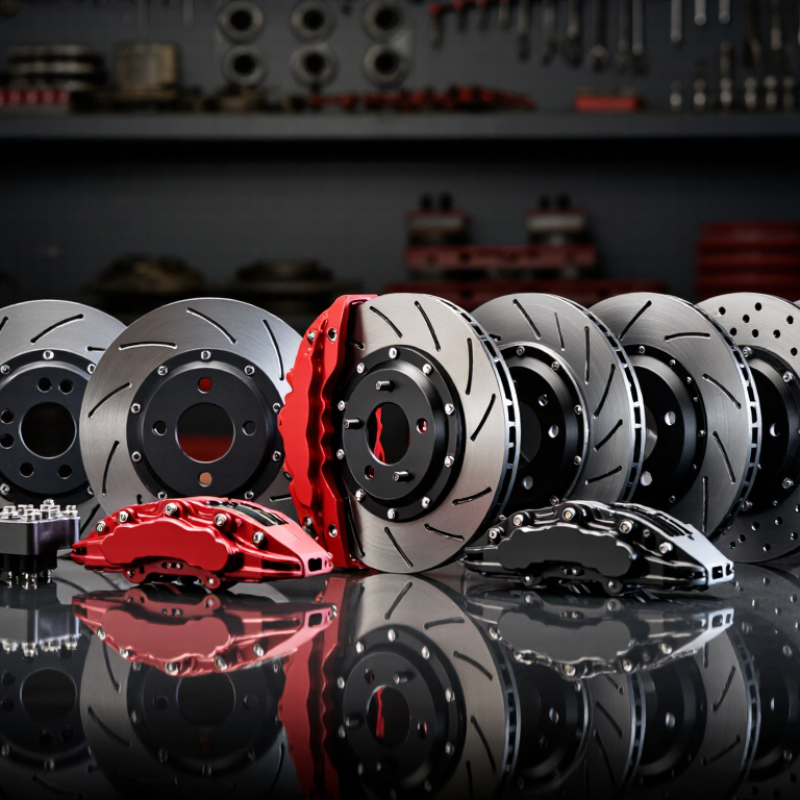
Rear brake calipers do more than hold brake pads in place. A hydraulic piston pushes the pads against the rotor when the driver presses the pedal. Friction then slows the wheel and helps control vehicle speed. Front brakes handle more load, but rear calipers still stabilize the vehicle during hard braking. They also support safe cornering and consistent stopping on wet roads. A poorly matched caliper may create uneven braking or premature wheel lockup. Small component. Major consequences.
For global buyers, fitment should guide every purchase. Mounting points, piston diameter, rotor thickness, pad shape, and parking brake design must match the vehicle. Floating calipers can allow slight movement, while fixed calipers usually offer more rigid pad control. Material also matters. Corrosion-resistant surfaces help in coastal climates, while strong seals protect pistons from dust and water. Reliable suppliers should provide dimensional drawings, material details, pressure-test records, and traceable quality documents.
Practical inspection reveals problems that product photos cannot show. Check slide pins for smooth movement and inspect dust boots for cracks. I once found new pads wearing unevenly because one slide pin had seized. That mistake was easy to miss. It changed how I evaluate replacement calipers. Appearance is not proof of performance. Proper bleeding, correct torque, and careful bedding also affect braking behavior. Rear brake balance depends on the entire system, not the caliper alone.

10 Best Back Brake Calipers for Global Buyers?
Key Criteria for Choosing Calipers Across Global Markets
Selecting the best back brake caliper starts with vehicle fitment, not appearance. Confirm the axle position, mounting pattern, rotor thickness, piston size, and clearance. A caliper that looks compatible may still rub against the wheel. Measure twice. Check the catalog carefully.
Material choice matters across climates. Aluminum can reduce weight, while coated steel may offer stronger resistance in harsh working conditions. Inspect piston seals, guide pins, dust boots, and bleeder screws. These small parts face water, road salt, dust, and repeated heat cycles. In my experience, poor sealing causes trouble before the main housing fails. That lesson is easy to overlook.
Global buyers should request test records, batch traceability, installation instructions, and clear warranty terms. Independent verification is useful, especially when specifications come from unfamiliar suppliers. Check operating temperature data and corrosion testing, but question vague claims. A low price can hide inconsistent machining or limited replacement support. Regional shipping, language, packaging quality, and available service parts also affect the real cost. No checklist is perfect. I would still inspect a sample before placing a large order. A practical comparison should balance braking performance, durability, compliance requirements, delivery reliability, and long-term maintenance.
| No. | Recommended Caliper Profile | Best-Fit Vehicle or Application | Typical Piston Configuration | Common Housing Material | Parking-Brake Integration | Typical Rotor Compatibility | Key Global-Buying Advantage | Important Verification Point |
|---|---|---|---|---|---|---|---|---|
| 1 | Integrated Mechanical Parking-Brake Caliper | Compact and midsize passenger cars with rear disc brakes | Single piston; commonly 30–42 mm piston diameter range | Cast iron or aluminum, depending on vehicle weight and corrosion requirements | Mechanical lever integrated into the caliper | Solid or ventilated rear rotors, generally about 9–12 inches in diameter | Broad replacement coverage Simple service parts and widely understood adjustment procedures | Confirm lever orientation, cable attachment, piston rewind direction, and mounting-hole spacing |
| 2 | Electronic Parking-Brake Caliper | Modern passenger cars and crossover vehicles with electronic parking brakes | Single piston with an electrically driven parking-brake actuator | Aluminum or coated cast iron | Integrated electric motor and reduction mechanism | Rear ventilated rotors are common on heavier vehicles | High vehicle-system integration Supports electronic parking-brake architectures without a separate cable | Verify connector type, actuator position, software service mode, polarity, and electronic compatibility |
| 3 | Low-Drag Floating Caliper | Fuel-efficient compact cars and urban vehicles | Single piston with sliding guide pins | Aluminum body or lightweight cast iron bracket-and-body construction | Usually mechanical cable or electrically actuated mechanism | Small to medium solid or ventilated rear rotors | Efficiency focused Reduced pad drag can help limit heat generation and rolling resistance | Check guide-pin condition, seal design, pad abutment clearance, and bracket alignment |
| 4 | Heavy-Duty Single-Piston Caliper | Pickup trucks, utility vehicles, vans, and light commercial vehicles | Large single piston; often approximately 40–55 mm, depending on application | High-strength cast iron or reinforced aluminum | Mechanical cable, drum-in-hat system, or electronic actuator | Large ventilated rear rotors with increased thermal capacity | Load-capable design Suitable for higher axle loads and frequent stop-start operation | Match axle rating, rotor thickness, pad area, caliper bracket strength, and wheel clearance |
| 5 | Aluminum Fixed Multi-Piston Caliper | Performance road cars, sports sedans, and premium applications | Two or four opposed pistons, depending on braking-system design | Aluminum alloy with corrosion-resistant surface treatment | Often uses a separate parking-brake system or an integrated electric actuator | Large ventilated rotors; rotor diameter and thickness must be matched precisely | High stiffness and control Opposed pistons can provide even pad loading and consistent pedal response | Confirm piston sizes, pad shape, bridge clearance, brake-line thread, and master-cylinder compatibility |
| 6 | Corrosion-Resistant Coastal-Climate Caliper | Vehicles operated in marine, humid, snowy, or road-salt environments | Single piston or dual piston, based on the original braking system | Coated cast iron or treated aluminum with stainless or protected hardware | Mechanical or electronic, depending on vehicle platform | Rotor and pad dimensions must follow the original vehicle specification | Environmental durability Protective coatings and sealed components help reduce corrosion-related seizure risk | Review salt-spray testing, coating thickness, fastener material, boot quality, and drain-path design |
| 7 | Regenerative-Braking-Compatible Caliper | Hybrid and battery-electric passenger vehicles | Usually a single-piston floating caliper, with vehicle-specific variations | Aluminum or coated cast iron | Commonly an electronic parking brake | Rear rotors may be smaller than those on comparable combustion vehicles, depending on regenerative-braking strategy | Suitable for reduced friction use Designed for vehicles where friction braking may be used less frequently | Check electronic service procedures, corrosion protection, low-drag performance, and compatibility with the vehicle control system |
| 8 | Drum-in-Hat Parking-Brake System | Large SUVs, performance vehicles, and vehicles requiring high parking-hold capacity | Rear service caliper is commonly single-piston; parking brake uses separate internal shoes | Cast iron or aluminum caliper with a steel drum section inside the rotor hat | Separate mechanical parking-brake shoes inside the rotor hat | Ventilated rear rotors with an integrated drum-in-hat section | Strong parking hold Separates service-brake and parking-brake functions | Verify drum-in-hat diameter, shoe adjustment, rotor hat depth, wheel offset, and backing-plate clearance |
| 9 | Remanufacturable Service Caliper | Fleet vehicles, older vehicles, and markets prioritizing repairability | Typically single piston with replaceable seal and boot kits | Cast iron or aluminum suitable for cleaning and surface restoration | Mechanical or electronic, depending on the original platform | Uses the original rotor diameter, thickness, and pad dimensions | Lifecycle value Supports seal replacement, inspection, and controlled refurbishment where regulations permit | Inspect bore condition, piston surface, bleeder threads, guide pins, and remanufacturing traceability |
| 10 | Modular Caliper for Multi-Market Platforms | Vehicle platforms sold across regions with different brake packages | Single or dual piston with interchangeable brackets or application-specific hardware | Aluminum or coated cast iron | Mechanical cable or electronic actuator, depending on regional specification | Multiple rotor and pad combinations may exist within the same vehicle family | Configuration flexibility Useful for distributors serving different wheel, axle-load, and regulatory specifications | Use VIN or exact vehicle data; confirm left/right position, regional brake package, ABS requirements, and homologation documents |
Rear brake calipers must match vehicle weight, axle balance, climate, and service habits. The ten leading choices include single-piston floating calipers for compact cars, two-piston units for family sedans, and four-piston fixed calipers for performance vehicles. Six-piston designs suit track-focused applications, while heavy-duty calipers support vans and commercial vehicles. Aluminum bodies reduce unsprung mass. Cast-iron bodies usually offer stronger heat tolerance. Integrated electronic parking-brake calipers fit newer vehicles. Separate mechanical parking-brake designs remain practical in harsh service areas. Remanufactured calipers can lower costs, but inspection quality varies. Low-dust designs help urban drivers, although pad selection still matters.
The 2024 Automotive Brake Caliper Market report from Grand View Research identifies rising demand for lightweight components and electronically controlled braking systems.
That trend sounds convincing, but buyers should not treat weight alone as proof of quality. Testing experience shows that piston sealing, slide-pin movement, bleeder access, and coating durability matter during real installation. A 2023 European Commission roadworthiness report also links braking performance with inspection safety, reinforcing the need for correct fitment and regular testing.
Measure the rotor diameter, mounting spacing, piston count, and brake-fluid specification before ordering.
Rear bias can change after an upgrade. That detail is easy to miss. Cold-weather fleets may prefer coated cast-iron units, while sports drivers need stable pedal feel after repeated stops. Even experienced technicians sometimes overlook parking-brake calibration. Recheck it.
Choosing among the 10 best back brake calipers requires more than comparing price and piston count. Compatibility starts with the vehicle’s exact year, engine, axle, rotor diameter, pad shape, and mounting pattern. Electronic parking brakes also need software compatibility. A catalog match is not proof. I once saw a visually identical caliper with a different hose thread. It fitted badly and leaked during testing.
Installation quality matters equally. Use the specified torque, replace damaged sealing washers, and bleed the system with the correct fluid. Check wheel clearance before final tightening. Proper pad bedding reduces uneven deposits and noise. The World Health Organization’s Global Status Report on Road Safety 2023 records about 1.19 million annual road deaths worldwide. That figure reinforces why braking components need documented testing, not vague claims. Regional buyers should request material certificates, corrosion-test results, traceability records, and quality-system evidence such as IATF 16949 certification. Standards can differ between North America, Europe, and Asia. Warranty coverage, warehouse location, return procedures, and import duties also affect the real purchase cost.
Tips: Compare the OE reference, not only photographs. Confirm left-hand-drive or right-hand-drive fitment where relevant. Ask for installation instructions and torque values. Keep one sample for physical measurement. Recheck rotor alignment after installation. Some listings remain incomplete, so careful verification is still necessary.
Comparing brake calipers requires more than checking piston size or painted finishes. Start with measured performance. FMVSS No. 135 and UNECE Regulation No. 90 define controlled braking requirements for replacement components, but laboratory compliance does not guarantee equal results on every vehicle. Check stopping consistency, piston movement, heat resistance, and compatibility with the vehicle’s electronic braking system. A caliper that feels firm during one test may drag after repeated downhill braking.
Cost needs a wider view. S&P Global Mobility reported that the average U.S. light vehicle age reached 12.6 years in 2024. Older vehicles often need new seals, slide pins, hoses, and hardware during installation. The cheapest unit can become expensive when corrosion returns within one winter. Ask whether the warranty covers labor, seized pistons, surface corrosion, and international shipping. Read the exclusions carefully. Warranty length alone is weak evidence.
Maintenance access matters for global buyers. Look for replaceable seals, available repair kits, clear torque specifications, and corrosion protection suited to local climate. TÜV inspection data repeatedly identifies braking-system wear as a common safety concern, although inspection rates vary between countries. That limitation matters. Reports are useful, not perfect. I would also compare piston dust-boot quality, bleed-screw placement, and spare-part availability. A small workshop should be able to service the caliper without specialized tools. Then verify pedal feel and rotor temperature after installation.
The composite score is based on braking performance, estimated global retail cost, warranty coverage, and maintenance convenience. Values represent typical aftermarket specifications and price ranges for anonymous caliper configurations; actual specifications may vary by vehicle and supplier.

